
Home
the Qur'an between Ottoman Empire and Turkish Republic: An Exegetical Tradition
Barnes and Noble
Loading Inventory...
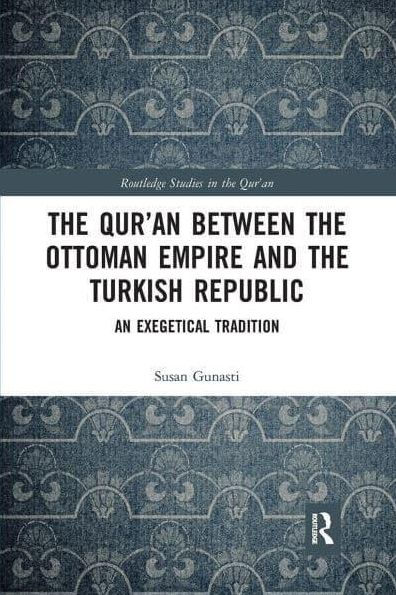
the Qur'an between Ottoman Empire and Turkish Republic: An Exegetical Tradition in Franklin, TN
Current price: $190.00
Barnes and Noble
the Qur'an between Ottoman Empire and Turkish Republic: An Exegetical Tradition in Franklin, TN
Current price: $190.00
Loading Inventory...
Size: Hardcover
The Qur’an between the Ottoman Empire and the Turkish Republic
is one of the few book-length studies on an Ottoman Qur’an commentary. Its premise is that "the Ottoman Empire" did not come to an end until 1950 so far as Islam was concerned in Turkey.
The work explores the relationship between Elmalılı’s Qur’an commentary and the intellectual trends of the period, including the impact of materialism, the sciences, notions of civilizational progress, and philosophy. In doing so, this study emphasizes the "local" aspect of the Qur’an commentary, through a sustained focus on the Istanbul context in which it was written. This work demonstrates that Elmalılı’s Qur’an commentary is a product of and reaction to the religious, intellectual, political, and social trends of the period. This work, in considering all the factors that led to the commissioning of Elmalılı’s Qur’an commentary, also contributes to our understanding of the history of Islam in early to mid-twentieth-century Turkey.
This intellectual history of modern Islamic thought contributes to our understanding of the genre of Qur’an commentary in the early twentieth century. It is a key text for students and scholars interested in Islam in the Ottoman Empire and Turkey, modern Islamic thought, and the Middle East.
is one of the few book-length studies on an Ottoman Qur’an commentary. Its premise is that "the Ottoman Empire" did not come to an end until 1950 so far as Islam was concerned in Turkey.
The work explores the relationship between Elmalılı’s Qur’an commentary and the intellectual trends of the period, including the impact of materialism, the sciences, notions of civilizational progress, and philosophy. In doing so, this study emphasizes the "local" aspect of the Qur’an commentary, through a sustained focus on the Istanbul context in which it was written. This work demonstrates that Elmalılı’s Qur’an commentary is a product of and reaction to the religious, intellectual, political, and social trends of the period. This work, in considering all the factors that led to the commissioning of Elmalılı’s Qur’an commentary, also contributes to our understanding of the history of Islam in early to mid-twentieth-century Turkey.
This intellectual history of modern Islamic thought contributes to our understanding of the genre of Qur’an commentary in the early twentieth century. It is a key text for students and scholars interested in Islam in the Ottoman Empire and Turkey, modern Islamic thought, and the Middle East.
The Qur’an between the Ottoman Empire and the Turkish Republic
is one of the few book-length studies on an Ottoman Qur’an commentary. Its premise is that "the Ottoman Empire" did not come to an end until 1950 so far as Islam was concerned in Turkey.
The work explores the relationship between Elmalılı’s Qur’an commentary and the intellectual trends of the period, including the impact of materialism, the sciences, notions of civilizational progress, and philosophy. In doing so, this study emphasizes the "local" aspect of the Qur’an commentary, through a sustained focus on the Istanbul context in which it was written. This work demonstrates that Elmalılı’s Qur’an commentary is a product of and reaction to the religious, intellectual, political, and social trends of the period. This work, in considering all the factors that led to the commissioning of Elmalılı’s Qur’an commentary, also contributes to our understanding of the history of Islam in early to mid-twentieth-century Turkey.
This intellectual history of modern Islamic thought contributes to our understanding of the genre of Qur’an commentary in the early twentieth century. It is a key text for students and scholars interested in Islam in the Ottoman Empire and Turkey, modern Islamic thought, and the Middle East.
is one of the few book-length studies on an Ottoman Qur’an commentary. Its premise is that "the Ottoman Empire" did not come to an end until 1950 so far as Islam was concerned in Turkey.
The work explores the relationship between Elmalılı’s Qur’an commentary and the intellectual trends of the period, including the impact of materialism, the sciences, notions of civilizational progress, and philosophy. In doing so, this study emphasizes the "local" aspect of the Qur’an commentary, through a sustained focus on the Istanbul context in which it was written. This work demonstrates that Elmalılı’s Qur’an commentary is a product of and reaction to the religious, intellectual, political, and social trends of the period. This work, in considering all the factors that led to the commissioning of Elmalılı’s Qur’an commentary, also contributes to our understanding of the history of Islam in early to mid-twentieth-century Turkey.
This intellectual history of modern Islamic thought contributes to our understanding of the genre of Qur’an commentary in the early twentieth century. It is a key text for students and scholars interested in Islam in the Ottoman Empire and Turkey, modern Islamic thought, and the Middle East.
You May Also Like










More About Barnes and Noble at CoolSprings Galleria
Barnes & Noble is the world’s largest retail bookseller and a leading retailer of content, digital media and educational products. Our Nook Digital business offers a lineup of NOOK® tablets and e-Readers and an expansive collection of digital reading content through the NOOK Store®. Barnes & Noble’s mission is to operate the best omni-channel specialty retail business in America, helping both our customers and booksellers reach their aspirations, while being a credit to the communities we serve.
1800 Galleria Blvd #1310, Franklin, TN 37067, United States
Find Barnes and Noble at CoolSprings Galleria in Franklin, TN
Visit Barnes and Noble at CoolSprings Galleria in Franklin, TN
