
Home
the Role of Birds World War One: How Ornithology Helped to Win Great
Barnes and Noble
Loading Inventory...
the Role of Birds World War One: How Ornithology Helped to Win Great in Franklin, TN
Current price: $42.95
Barnes and Noble
the Role of Birds World War One: How Ornithology Helped to Win Great in Franklin, TN
Current price: $42.95
Loading Inventory...
Size: Hardcover
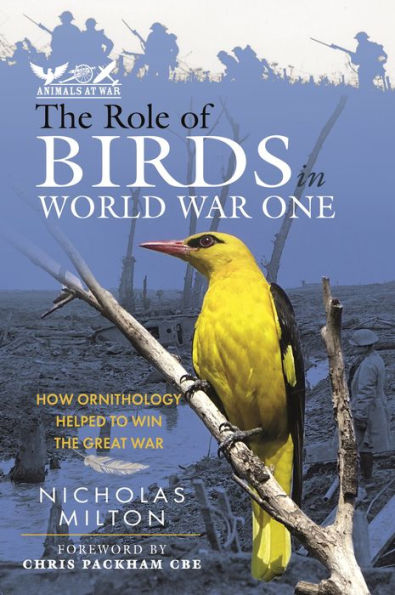
The British Expeditionary Force sent to France in the late summer of 1914 has been referred to as ‘The Best British Army Ever Sent to War’ as it was one of the most highly trained and disciplined forces in the world. It was also the ‘Best Birdwatching Army Ever Sent to War’ for among its ranks were hundreds of both amateur and professional ornithologists. When not fighting many soldiers turned to birdwatching as a way of wiling away the long hours spent on guard duty or watching over ‘no man's land’. As a result, the hobby ranked as one of the most popular pasttimes for soldiers at the front, on a par with smoking, writing, games, gambling, sport and shooting rats. The list of birds seen by soldiers serving in all the theaters of war was truly impressive ranging from the common like sparrows, skylarks and swallows to the exotic like golden orioles, hoopoes and beeeaters.
It was not just at the battle front that birds found themselves in the firing line but also on the home front. Birds provided inspiration for politicians, poets and painters who carried on despite the terrible conflict raging all around them. For the Foreign Secretary Edward Grey, who worked tirelessly to preserve peace but ended up convincing the House of Commons to go to war, birds were his hinterland. But as well as declaring war on Germany on 4 August 1914 the government also declared war on the humble house sparrow, farmers falsely accusing it of destroying Britain’s dwindling wheat and oat supplies.
When the guns finally fell silent on the 11 November 1918 and the Great War came to an ignoble end, a generation of birdwatchers lay dead. Among them were scientists, researchers, lords, librarians, artists, authors, professors, poets, lawyers, surgeons and explorers, many barely having entered manhood. If they had lived the science of ornithology and the hobby of birdwatching would have undoubtedly been much the richer. A selection of them is included in the Ornithological Roll of honor at the back of this book.
It was not just at the battle front that birds found themselves in the firing line but also on the home front. Birds provided inspiration for politicians, poets and painters who carried on despite the terrible conflict raging all around them. For the Foreign Secretary Edward Grey, who worked tirelessly to preserve peace but ended up convincing the House of Commons to go to war, birds were his hinterland. But as well as declaring war on Germany on 4 August 1914 the government also declared war on the humble house sparrow, farmers falsely accusing it of destroying Britain’s dwindling wheat and oat supplies.
When the guns finally fell silent on the 11 November 1918 and the Great War came to an ignoble end, a generation of birdwatchers lay dead. Among them were scientists, researchers, lords, librarians, artists, authors, professors, poets, lawyers, surgeons and explorers, many barely having entered manhood. If they had lived the science of ornithology and the hobby of birdwatching would have undoubtedly been much the richer. A selection of them is included in the Ornithological Roll of honor at the back of this book.
The British Expeditionary Force sent to France in the late summer of 1914 has been referred to as ‘The Best British Army Ever Sent to War’ as it was one of the most highly trained and disciplined forces in the world. It was also the ‘Best Birdwatching Army Ever Sent to War’ for among its ranks were hundreds of both amateur and professional ornithologists. When not fighting many soldiers turned to birdwatching as a way of wiling away the long hours spent on guard duty or watching over ‘no man's land’. As a result, the hobby ranked as one of the most popular pasttimes for soldiers at the front, on a par with smoking, writing, games, gambling, sport and shooting rats. The list of birds seen by soldiers serving in all the theaters of war was truly impressive ranging from the common like sparrows, skylarks and swallows to the exotic like golden orioles, hoopoes and beeeaters.
It was not just at the battle front that birds found themselves in the firing line but also on the home front. Birds provided inspiration for politicians, poets and painters who carried on despite the terrible conflict raging all around them. For the Foreign Secretary Edward Grey, who worked tirelessly to preserve peace but ended up convincing the House of Commons to go to war, birds were his hinterland. But as well as declaring war on Germany on 4 August 1914 the government also declared war on the humble house sparrow, farmers falsely accusing it of destroying Britain’s dwindling wheat and oat supplies.
When the guns finally fell silent on the 11 November 1918 and the Great War came to an ignoble end, a generation of birdwatchers lay dead. Among them were scientists, researchers, lords, librarians, artists, authors, professors, poets, lawyers, surgeons and explorers, many barely having entered manhood. If they had lived the science of ornithology and the hobby of birdwatching would have undoubtedly been much the richer. A selection of them is included in the Ornithological Roll of honor at the back of this book.
It was not just at the battle front that birds found themselves in the firing line but also on the home front. Birds provided inspiration for politicians, poets and painters who carried on despite the terrible conflict raging all around them. For the Foreign Secretary Edward Grey, who worked tirelessly to preserve peace but ended up convincing the House of Commons to go to war, birds were his hinterland. But as well as declaring war on Germany on 4 August 1914 the government also declared war on the humble house sparrow, farmers falsely accusing it of destroying Britain’s dwindling wheat and oat supplies.
When the guns finally fell silent on the 11 November 1918 and the Great War came to an ignoble end, a generation of birdwatchers lay dead. Among them were scientists, researchers, lords, librarians, artists, authors, professors, poets, lawyers, surgeons and explorers, many barely having entered manhood. If they had lived the science of ornithology and the hobby of birdwatching would have undoubtedly been much the richer. A selection of them is included in the Ornithological Roll of honor at the back of this book.
You May Also Like









More About Barnes and Noble at CoolSprings Galleria
Barnes & Noble is the world’s largest retail bookseller and a leading retailer of content, digital media and educational products. Our Nook Digital business offers a lineup of NOOK® tablets and e-Readers and an expansive collection of digital reading content through the NOOK Store®. Barnes & Noble’s mission is to operate the best omni-channel specialty retail business in America, helping both our customers and booksellers reach their aspirations, while being a credit to the communities we serve.
1800 Galleria Blvd #1310, Franklin, TN 37067, United States
Find Barnes and Noble at CoolSprings Galleria in Franklin, TN
Visit Barnes and Noble at CoolSprings Galleria in Franklin, TN
