
Home
The Sandinista Revolution: A Global Latin American History
Barnes and Noble
Loading Inventory...
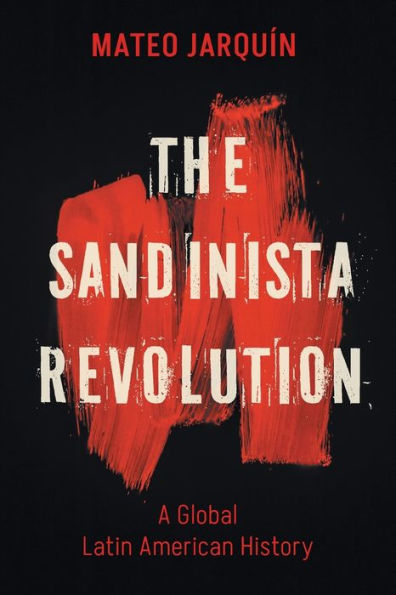
The Sandinista Revolution: A Global Latin American History in Franklin, TN
Current price: $34.40
Barnes and Noble
The Sandinista Revolution: A Global Latin American History in Franklin, TN
Current price: $34.40
Loading Inventory...
Size: Paperback
The Sandinista Revolution and its victory against the Somoza dictatorship in Nicaragua gripped the United States and the world in the 1980s. But as soon as the Sandinistas were voted out of power in 1990 and the Iran Contra affair ceased to make headlines, it became, in Washington at least, a thing of the past.
Mateo Jarquín recenters the revolution as a major episode in the history of Latin America, the international left, and the Cold War. Drawing on research in Nicaragua, Cuba, Mexico, Panama, and Costa Rica, he recreates the perspective of Sandinista leaders in Managua and argues that their revolutionary project must be understood in international context. Because struggles over the Revolution unfolded transnationally, the Nicaraguan drama had lasting consequences for Latin American politics at a critical juncture. It also reverberated in Western Europe, among socialists worldwide, and beyond, illuminating global dynamics like the spread of democracy and the demise of a bipolar world dominated by two superpowers.
Jarquín offers a sweeping analysis of the last leftwing revolution of the twentieth century, an overview of interAmerican affairs in the 1980s, and an incisive look at the making of the post–Cold War order.
Mateo Jarquín recenters the revolution as a major episode in the history of Latin America, the international left, and the Cold War. Drawing on research in Nicaragua, Cuba, Mexico, Panama, and Costa Rica, he recreates the perspective of Sandinista leaders in Managua and argues that their revolutionary project must be understood in international context. Because struggles over the Revolution unfolded transnationally, the Nicaraguan drama had lasting consequences for Latin American politics at a critical juncture. It also reverberated in Western Europe, among socialists worldwide, and beyond, illuminating global dynamics like the spread of democracy and the demise of a bipolar world dominated by two superpowers.
Jarquín offers a sweeping analysis of the last leftwing revolution of the twentieth century, an overview of interAmerican affairs in the 1980s, and an incisive look at the making of the post–Cold War order.
The Sandinista Revolution and its victory against the Somoza dictatorship in Nicaragua gripped the United States and the world in the 1980s. But as soon as the Sandinistas were voted out of power in 1990 and the Iran Contra affair ceased to make headlines, it became, in Washington at least, a thing of the past.
Mateo Jarquín recenters the revolution as a major episode in the history of Latin America, the international left, and the Cold War. Drawing on research in Nicaragua, Cuba, Mexico, Panama, and Costa Rica, he recreates the perspective of Sandinista leaders in Managua and argues that their revolutionary project must be understood in international context. Because struggles over the Revolution unfolded transnationally, the Nicaraguan drama had lasting consequences for Latin American politics at a critical juncture. It also reverberated in Western Europe, among socialists worldwide, and beyond, illuminating global dynamics like the spread of democracy and the demise of a bipolar world dominated by two superpowers.
Jarquín offers a sweeping analysis of the last leftwing revolution of the twentieth century, an overview of interAmerican affairs in the 1980s, and an incisive look at the making of the post–Cold War order.
Mateo Jarquín recenters the revolution as a major episode in the history of Latin America, the international left, and the Cold War. Drawing on research in Nicaragua, Cuba, Mexico, Panama, and Costa Rica, he recreates the perspective of Sandinista leaders in Managua and argues that their revolutionary project must be understood in international context. Because struggles over the Revolution unfolded transnationally, the Nicaraguan drama had lasting consequences for Latin American politics at a critical juncture. It also reverberated in Western Europe, among socialists worldwide, and beyond, illuminating global dynamics like the spread of democracy and the demise of a bipolar world dominated by two superpowers.
Jarquín offers a sweeping analysis of the last leftwing revolution of the twentieth century, an overview of interAmerican affairs in the 1980s, and an incisive look at the making of the post–Cold War order.
You May Also Like









More About Barnes and Noble at CoolSprings Galleria
Barnes & Noble is the world’s largest retail bookseller and a leading retailer of content, digital media and educational products. Our Nook Digital business offers a lineup of NOOK® tablets and e-Readers and an expansive collection of digital reading content through the NOOK Store®. Barnes & Noble’s mission is to operate the best omni-channel specialty retail business in America, helping both our customers and booksellers reach their aspirations, while being a credit to the communities we serve.
1800 Galleria Blvd #1310, Franklin, TN 37067, United States
Find Barnes and Noble at CoolSprings Galleria in Franklin, TN
Visit Barnes and Noble at CoolSprings Galleria in Franklin, TN
