
Home
The Selling of DSM: Rhetoric Science Psychiatry
Barnes and Noble
Loading Inventory...
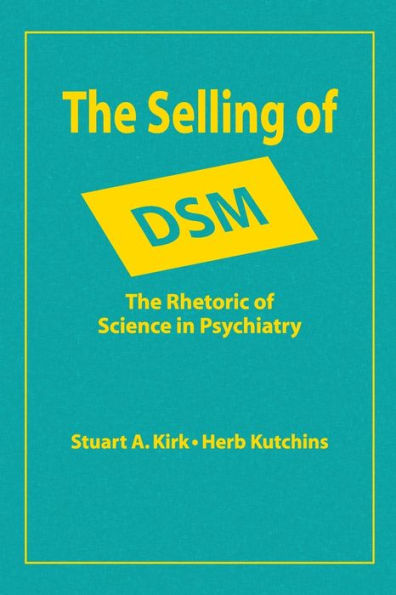
The Selling of DSM: Rhetoric Science Psychiatry in Franklin, TN
Current price: $63.99
Barnes and Noble
The Selling of DSM: Rhetoric Science Psychiatry in Franklin, TN
Current price: $63.99
Loading Inventory...
Size: Paperback
When it was first published in 1980, the
Diagnostic and Statistical Manual of Mental Disorders, Third Edition
—univer-sally known as
DSM-III
—embodied a radical new method for identifying psychiatric illness. Kirk and Kutchins challenge the general understanding about the research data and the pro-cess that led to the peer acceptance of
DSM-III.
Their original and controversial reconstruction of that moment concen-trates on how a small group of researchers interpreted their findings about a specific problem—psychiatric reliability—to promote their beliefs about mental illness and to challenge the then-dominant Freudian paradigm.
Diagnostic and Statistical Manual of Mental Disorders, Third Edition
—univer-sally known as
DSM-III
—embodied a radical new method for identifying psychiatric illness. Kirk and Kutchins challenge the general understanding about the research data and the pro-cess that led to the peer acceptance of
DSM-III.
Their original and controversial reconstruction of that moment concen-trates on how a small group of researchers interpreted their findings about a specific problem—psychiatric reliability—to promote their beliefs about mental illness and to challenge the then-dominant Freudian paradigm.
When it was first published in 1980, the
Diagnostic and Statistical Manual of Mental Disorders, Third Edition
—univer-sally known as
DSM-III
—embodied a radical new method for identifying psychiatric illness. Kirk and Kutchins challenge the general understanding about the research data and the pro-cess that led to the peer acceptance of
DSM-III.
Their original and controversial reconstruction of that moment concen-trates on how a small group of researchers interpreted their findings about a specific problem—psychiatric reliability—to promote their beliefs about mental illness and to challenge the then-dominant Freudian paradigm.
Diagnostic and Statistical Manual of Mental Disorders, Third Edition
—univer-sally known as
DSM-III
—embodied a radical new method for identifying psychiatric illness. Kirk and Kutchins challenge the general understanding about the research data and the pro-cess that led to the peer acceptance of
DSM-III.
Their original and controversial reconstruction of that moment concen-trates on how a small group of researchers interpreted their findings about a specific problem—psychiatric reliability—to promote their beliefs about mental illness and to challenge the then-dominant Freudian paradigm.
You May Also Like

















More About Barnes and Noble at CoolSprings Galleria
Barnes & Noble is the world’s largest retail bookseller and a leading retailer of content, digital media and educational products. Our Nook Digital business offers a lineup of NOOK® tablets and e-Readers and an expansive collection of digital reading content through the NOOK Store®. Barnes & Noble’s mission is to operate the best omni-channel specialty retail business in America, helping both our customers and booksellers reach their aspirations, while being a credit to the communities we serve.
1800 Galleria Blvd #1310, Franklin, TN 37067, United States
Find Barnes and Noble at CoolSprings Galleria in Franklin, TN
Visit Barnes and Noble at CoolSprings Galleria in Franklin, TN
