
Home
The Slang Dictionary -Etymological, Historical, and Anecdotal
Barnes and Noble
Loading Inventory...
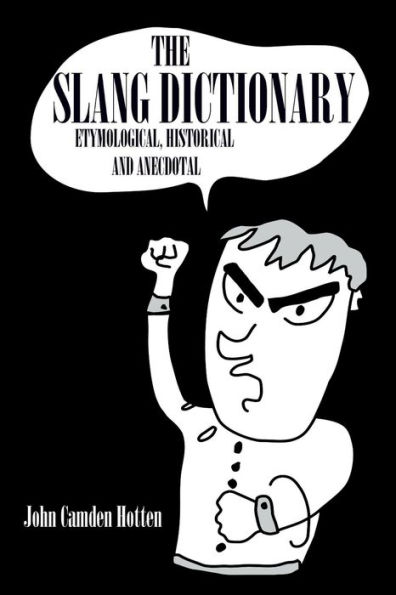
The Slang Dictionary -Etymological, Historical, and Anecdotal in Franklin, TN
Current price: $13.99
Barnes and Noble
The Slang Dictionary -Etymological, Historical, and Anecdotal in Franklin, TN
Current price: $13.99
Loading Inventory...
Size: Paperback
A brief excerpt from the book: "The universality of Slang is extraordinary. Let any person for a short time narrowly examine the conversation of his dearest and nearest friends, or even analyse his own supposed correct talk, and he shall be amazed at the numerous unauthorized, and what we can only call vulgar, words in constant use. One peculiarity of the growth of Slang is the finding of new meanings for old words. Take, for instance, the verbs "do," "cut," "go," and "take," and see how they are used to express fresh ideas, and then let us ask ourselves how is it possible for a Frenchman or German, be he never so well educated, to avoid continually blundering and floundering amongst our little words when trying to make himself understood in an ordinary conversation? He may have studied our language the required time, and have gone through the usual amount of "grinding," and practised the common allotment of patience, but all to no purpose as far as accuracy is concerned. As, however, we do not make our language, nor for the matter of that our Slang, for the convenience or inconvenience of foreigners, we need not pursue this portion of the subject further. "Jabber" and "hoax" were Slang and Cant terms in Swift's time; so, indeed, were 'mob' and 'sham'."
A brief excerpt from the book: "The universality of Slang is extraordinary. Let any person for a short time narrowly examine the conversation of his dearest and nearest friends, or even analyse his own supposed correct talk, and he shall be amazed at the numerous unauthorized, and what we can only call vulgar, words in constant use. One peculiarity of the growth of Slang is the finding of new meanings for old words. Take, for instance, the verbs "do," "cut," "go," and "take," and see how they are used to express fresh ideas, and then let us ask ourselves how is it possible for a Frenchman or German, be he never so well educated, to avoid continually blundering and floundering amongst our little words when trying to make himself understood in an ordinary conversation? He may have studied our language the required time, and have gone through the usual amount of "grinding," and practised the common allotment of patience, but all to no purpose as far as accuracy is concerned. As, however, we do not make our language, nor for the matter of that our Slang, for the convenience or inconvenience of foreigners, we need not pursue this portion of the subject further. "Jabber" and "hoax" were Slang and Cant terms in Swift's time; so, indeed, were 'mob' and 'sham'."
You May Also Like










More About Barnes and Noble at CoolSprings Galleria
Barnes & Noble is the world’s largest retail bookseller and a leading retailer of content, digital media and educational products. Our Nook Digital business offers a lineup of NOOK® tablets and e-Readers and an expansive collection of digital reading content through the NOOK Store®. Barnes & Noble’s mission is to operate the best omni-channel specialty retail business in America, helping both our customers and booksellers reach their aspirations, while being a credit to the communities we serve.
1800 Galleria Blvd #1310, Franklin, TN 37067, United States
Find Barnes and Noble at CoolSprings Galleria in Franklin, TN
Visit Barnes and Noble at CoolSprings Galleria in Franklin, TN
