
Home
The Tariff in the Days of Henry Clay and Since: An Exhaustive Review of our Tariff Legislation from 1812 to 1896
Barnes and Noble
Loading Inventory...
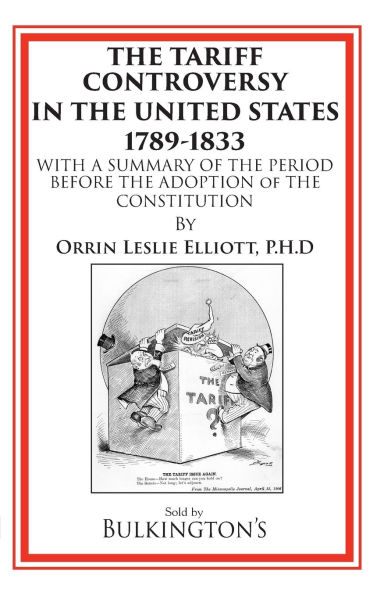
The Tariff in the Days of Henry Clay and Since: An Exhaustive Review of our Tariff Legislation from 1812 to 1896 in Franklin, TN
Current price: $13.99
Barnes and Noble
The Tariff in the Days of Henry Clay and Since: An Exhaustive Review of our Tariff Legislation from 1812 to 1896 in Franklin, TN
Current price: $13.99
Loading Inventory...
Size: OS
The Tariff in the Days of Henry Clay and Since: An Exhaustive Review of our Tariff Legislation from 1812 to 1896 was published in 1896, the year William McKinley would run for, and win, the Presidency. Besides being a history of tariffs, it is also a very sharp synopsis of American political history. He describes every Congressional election from 1812 to 1894. He describes a Congress very different from the Congress we see today, one that is quick acting and waist deep in the details of legislation.
It's an expert distillation of 80 years of Congressional history on the subject of tariffs. President McKinley, who served first as a Congressman, and then as Governor of Ohio, demonstrates his expertise on the importance of tariff protection for American industry. While he clearly has a partisan leaning, as a Republican, he offers many facts and figures that demonstrate that protectionism and tariffs have been instrumental in building up the United States into an industrial powerhouse.
He gives a great deal of evidence for how tariffs increased wages and growth. He cites President Harrison, who said: "The total wealth of the country in 1860," he [Harrison] continued, "was $16,159,616,068. In 1890 it amounted to $62,610,000,000, an increase of 287 percent." And, on wages, he cites Harrison again: In 1880 the number of employees was 1,301,388. In 1890 the number of employees was 2,251,134. In 1880 the wages earned were $501,965,778. In 1890 the wages earned were $1,221,170,454. ... The wage earnings not only show an increased aggregate, but an increase per capita from $386 in 1880 to $547 in 1890, or 41.71 percent."
With tariffs back in the headlines, this book will be invaluable for those who want to understand the importance of protection, and the policies helped America become an industrial superpower.
This is a new edition of the public domain book that was originally published in 18960.
This new edition includes:
A new Foreword written by the publisher.
Several footnotes giving context to the remarks made by the author.
New format, layout, and typesetting.
Bulkington Book's mission is to build a bridge into the past, before film, television, copyright, and internet swallowed up the world. We found this story worthy of revival, and we hope you find it worth your while.
It's an expert distillation of 80 years of Congressional history on the subject of tariffs. President McKinley, who served first as a Congressman, and then as Governor of Ohio, demonstrates his expertise on the importance of tariff protection for American industry. While he clearly has a partisan leaning, as a Republican, he offers many facts and figures that demonstrate that protectionism and tariffs have been instrumental in building up the United States into an industrial powerhouse.
He gives a great deal of evidence for how tariffs increased wages and growth. He cites President Harrison, who said: "The total wealth of the country in 1860," he [Harrison] continued, "was $16,159,616,068. In 1890 it amounted to $62,610,000,000, an increase of 287 percent." And, on wages, he cites Harrison again: In 1880 the number of employees was 1,301,388. In 1890 the number of employees was 2,251,134. In 1880 the wages earned were $501,965,778. In 1890 the wages earned were $1,221,170,454. ... The wage earnings not only show an increased aggregate, but an increase per capita from $386 in 1880 to $547 in 1890, or 41.71 percent."
With tariffs back in the headlines, this book will be invaluable for those who want to understand the importance of protection, and the policies helped America become an industrial superpower.
This is a new edition of the public domain book that was originally published in 18960.
This new edition includes:
A new Foreword written by the publisher.
Several footnotes giving context to the remarks made by the author.
New format, layout, and typesetting.
Bulkington Book's mission is to build a bridge into the past, before film, television, copyright, and internet swallowed up the world. We found this story worthy of revival, and we hope you find it worth your while.
The Tariff in the Days of Henry Clay and Since: An Exhaustive Review of our Tariff Legislation from 1812 to 1896 was published in 1896, the year William McKinley would run for, and win, the Presidency. Besides being a history of tariffs, it is also a very sharp synopsis of American political history. He describes every Congressional election from 1812 to 1894. He describes a Congress very different from the Congress we see today, one that is quick acting and waist deep in the details of legislation.
It's an expert distillation of 80 years of Congressional history on the subject of tariffs. President McKinley, who served first as a Congressman, and then as Governor of Ohio, demonstrates his expertise on the importance of tariff protection for American industry. While he clearly has a partisan leaning, as a Republican, he offers many facts and figures that demonstrate that protectionism and tariffs have been instrumental in building up the United States into an industrial powerhouse.
He gives a great deal of evidence for how tariffs increased wages and growth. He cites President Harrison, who said: "The total wealth of the country in 1860," he [Harrison] continued, "was $16,159,616,068. In 1890 it amounted to $62,610,000,000, an increase of 287 percent." And, on wages, he cites Harrison again: In 1880 the number of employees was 1,301,388. In 1890 the number of employees was 2,251,134. In 1880 the wages earned were $501,965,778. In 1890 the wages earned were $1,221,170,454. ... The wage earnings not only show an increased aggregate, but an increase per capita from $386 in 1880 to $547 in 1890, or 41.71 percent."
With tariffs back in the headlines, this book will be invaluable for those who want to understand the importance of protection, and the policies helped America become an industrial superpower.
This is a new edition of the public domain book that was originally published in 18960.
This new edition includes:
A new Foreword written by the publisher.
Several footnotes giving context to the remarks made by the author.
New format, layout, and typesetting.
Bulkington Book's mission is to build a bridge into the past, before film, television, copyright, and internet swallowed up the world. We found this story worthy of revival, and we hope you find it worth your while.
It's an expert distillation of 80 years of Congressional history on the subject of tariffs. President McKinley, who served first as a Congressman, and then as Governor of Ohio, demonstrates his expertise on the importance of tariff protection for American industry. While he clearly has a partisan leaning, as a Republican, he offers many facts and figures that demonstrate that protectionism and tariffs have been instrumental in building up the United States into an industrial powerhouse.
He gives a great deal of evidence for how tariffs increased wages and growth. He cites President Harrison, who said: "The total wealth of the country in 1860," he [Harrison] continued, "was $16,159,616,068. In 1890 it amounted to $62,610,000,000, an increase of 287 percent." And, on wages, he cites Harrison again: In 1880 the number of employees was 1,301,388. In 1890 the number of employees was 2,251,134. In 1880 the wages earned were $501,965,778. In 1890 the wages earned were $1,221,170,454. ... The wage earnings not only show an increased aggregate, but an increase per capita from $386 in 1880 to $547 in 1890, or 41.71 percent."
With tariffs back in the headlines, this book will be invaluable for those who want to understand the importance of protection, and the policies helped America become an industrial superpower.
This is a new edition of the public domain book that was originally published in 18960.
This new edition includes:
A new Foreword written by the publisher.
Several footnotes giving context to the remarks made by the author.
New format, layout, and typesetting.
Bulkington Book's mission is to build a bridge into the past, before film, television, copyright, and internet swallowed up the world. We found this story worthy of revival, and we hope you find it worth your while.
You May Also Like


















More About Barnes and Noble at CoolSprings Galleria
Barnes & Noble is the world’s largest retail bookseller and a leading retailer of content, digital media and educational products. Our Nook Digital business offers a lineup of NOOK® tablets and e-Readers and an expansive collection of digital reading content through the NOOK Store®. Barnes & Noble’s mission is to operate the best omni-channel specialty retail business in America, helping both our customers and booksellers reach their aspirations, while being a credit to the communities we serve.
1800 Galleria Blvd #1310, Franklin, TN 37067, United States
Find Barnes and Noble at CoolSprings Galleria in Franklin, TN
Visit Barnes and Noble at CoolSprings Galleria in Franklin, TN
