
Home
The Three Sui Quash the Demons' Revolt: A Comic Novel Attributed to Luo Guanzhong
Barnes and Noble
Loading Inventory...
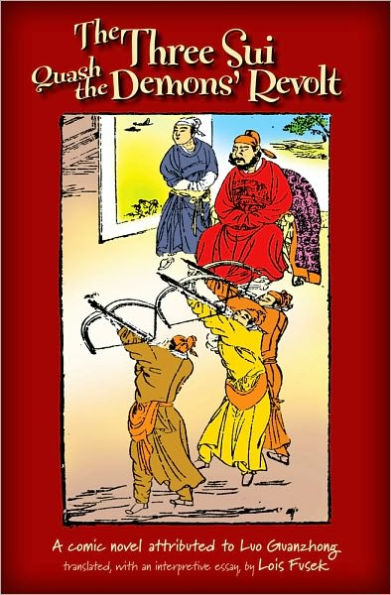
The Three Sui Quash the Demons' Revolt: A Comic Novel Attributed to Luo Guanzhong in Franklin, TN
Current price: $49.00
Barnes and Noble
The Three Sui Quash the Demons' Revolt: A Comic Novel Attributed to Luo Guanzhong in Franklin, TN
Current price: $49.00
Loading Inventory...
Size: OS
The twentychapter novel
The Three Sui Quash the Demons’ Revolt
is traditionally attributed to Luo Guanzhong (d. after 1364?), the alleged author of two of China’s most famous and beloved works of fiction,
The Romance of the Three Kingdoms
and
The Water Margin.
The Three Sui
tells the story of the uprising of adherents of the Maitreya Buddha led by Wang Ze in 1047–1048. Wang Ze was eventually executed and all future heterodox activity outlawed.
Paradoxically,
treats the rebellion as an occasion for slapstick, baggypants humor in which facts are distorted and wildly mixed with fiction. Wang Ze's reallife lieutenants show up as a comical peddler and a mysterious Daoist priest. A celebrated warrior takes part in the rebellion despite having died seventeen years earlier. Although the novel is divided into chapters and otherwise follows the traditional format for such extended narratives, a careful examination reveals The Three Sui is an arrangement of selfcontained vernacular stories. No story bears an intrinsic relationship to any other story. And because the integrity of the various stories has been so remarkably preserved,
is a vernacular novel in which the vernacular story reigns supreme.
Although the Wang Ze rebellion took place during the Northern Song dynasty (960–1127), ultimately
is the story of the Ming dynasty (1368–1644) in Song masquerade. It calls attention to the social unrest, even anarchy, caused by the rising power and influence of movements like The White Lotus Society and warns of the Ming’s downfall unless such groups are contained. In this, the novel proved to be a prescient voice: The Ming collapsed as the result of a central authority weakened by mass sectarian uprisings.
has been little known and sadly overlooked by scholars of Chinese literature and history. Now this vibrant translation and insightful interpretive essay make this early example of Chinese vernacular fiction available to a broad audience interested in comparative literature and fiction.
The Three Sui Quash the Demons’ Revolt
is traditionally attributed to Luo Guanzhong (d. after 1364?), the alleged author of two of China’s most famous and beloved works of fiction,
The Romance of the Three Kingdoms
and
The Water Margin.
The Three Sui
tells the story of the uprising of adherents of the Maitreya Buddha led by Wang Ze in 1047–1048. Wang Ze was eventually executed and all future heterodox activity outlawed.
Paradoxically,
treats the rebellion as an occasion for slapstick, baggypants humor in which facts are distorted and wildly mixed with fiction. Wang Ze's reallife lieutenants show up as a comical peddler and a mysterious Daoist priest. A celebrated warrior takes part in the rebellion despite having died seventeen years earlier. Although the novel is divided into chapters and otherwise follows the traditional format for such extended narratives, a careful examination reveals The Three Sui is an arrangement of selfcontained vernacular stories. No story bears an intrinsic relationship to any other story. And because the integrity of the various stories has been so remarkably preserved,
is a vernacular novel in which the vernacular story reigns supreme.
Although the Wang Ze rebellion took place during the Northern Song dynasty (960–1127), ultimately
is the story of the Ming dynasty (1368–1644) in Song masquerade. It calls attention to the social unrest, even anarchy, caused by the rising power and influence of movements like The White Lotus Society and warns of the Ming’s downfall unless such groups are contained. In this, the novel proved to be a prescient voice: The Ming collapsed as the result of a central authority weakened by mass sectarian uprisings.
has been little known and sadly overlooked by scholars of Chinese literature and history. Now this vibrant translation and insightful interpretive essay make this early example of Chinese vernacular fiction available to a broad audience interested in comparative literature and fiction.
The twentychapter novel
The Three Sui Quash the Demons’ Revolt
is traditionally attributed to Luo Guanzhong (d. after 1364?), the alleged author of two of China’s most famous and beloved works of fiction,
The Romance of the Three Kingdoms
and
The Water Margin.
The Three Sui
tells the story of the uprising of adherents of the Maitreya Buddha led by Wang Ze in 1047–1048. Wang Ze was eventually executed and all future heterodox activity outlawed.
Paradoxically,
treats the rebellion as an occasion for slapstick, baggypants humor in which facts are distorted and wildly mixed with fiction. Wang Ze's reallife lieutenants show up as a comical peddler and a mysterious Daoist priest. A celebrated warrior takes part in the rebellion despite having died seventeen years earlier. Although the novel is divided into chapters and otherwise follows the traditional format for such extended narratives, a careful examination reveals The Three Sui is an arrangement of selfcontained vernacular stories. No story bears an intrinsic relationship to any other story. And because the integrity of the various stories has been so remarkably preserved,
is a vernacular novel in which the vernacular story reigns supreme.
Although the Wang Ze rebellion took place during the Northern Song dynasty (960–1127), ultimately
is the story of the Ming dynasty (1368–1644) in Song masquerade. It calls attention to the social unrest, even anarchy, caused by the rising power and influence of movements like The White Lotus Society and warns of the Ming’s downfall unless such groups are contained. In this, the novel proved to be a prescient voice: The Ming collapsed as the result of a central authority weakened by mass sectarian uprisings.
has been little known and sadly overlooked by scholars of Chinese literature and history. Now this vibrant translation and insightful interpretive essay make this early example of Chinese vernacular fiction available to a broad audience interested in comparative literature and fiction.
The Three Sui Quash the Demons’ Revolt
is traditionally attributed to Luo Guanzhong (d. after 1364?), the alleged author of two of China’s most famous and beloved works of fiction,
The Romance of the Three Kingdoms
and
The Water Margin.
The Three Sui
tells the story of the uprising of adherents of the Maitreya Buddha led by Wang Ze in 1047–1048. Wang Ze was eventually executed and all future heterodox activity outlawed.
Paradoxically,
treats the rebellion as an occasion for slapstick, baggypants humor in which facts are distorted and wildly mixed with fiction. Wang Ze's reallife lieutenants show up as a comical peddler and a mysterious Daoist priest. A celebrated warrior takes part in the rebellion despite having died seventeen years earlier. Although the novel is divided into chapters and otherwise follows the traditional format for such extended narratives, a careful examination reveals The Three Sui is an arrangement of selfcontained vernacular stories. No story bears an intrinsic relationship to any other story. And because the integrity of the various stories has been so remarkably preserved,
is a vernacular novel in which the vernacular story reigns supreme.
Although the Wang Ze rebellion took place during the Northern Song dynasty (960–1127), ultimately
is the story of the Ming dynasty (1368–1644) in Song masquerade. It calls attention to the social unrest, even anarchy, caused by the rising power and influence of movements like The White Lotus Society and warns of the Ming’s downfall unless such groups are contained. In this, the novel proved to be a prescient voice: The Ming collapsed as the result of a central authority weakened by mass sectarian uprisings.
has been little known and sadly overlooked by scholars of Chinese literature and history. Now this vibrant translation and insightful interpretive essay make this early example of Chinese vernacular fiction available to a broad audience interested in comparative literature and fiction.
You May Also Like












More About Barnes and Noble at CoolSprings Galleria
Barnes & Noble is the world’s largest retail bookseller and a leading retailer of content, digital media and educational products. Our Nook Digital business offers a lineup of NOOK® tablets and e-Readers and an expansive collection of digital reading content through the NOOK Store®. Barnes & Noble’s mission is to operate the best omni-channel specialty retail business in America, helping both our customers and booksellers reach their aspirations, while being a credit to the communities we serve.
1800 Galleria Blvd #1310, Franklin, TN 37067, United States
Find Barnes and Noble at CoolSprings Galleria in Franklin, TN
Visit Barnes and Noble at CoolSprings Galleria in Franklin, TN