
Home
the U.S. Army Combat Historian and History Operations: World War I to Vietnam
Barnes and Noble
Loading Inventory...
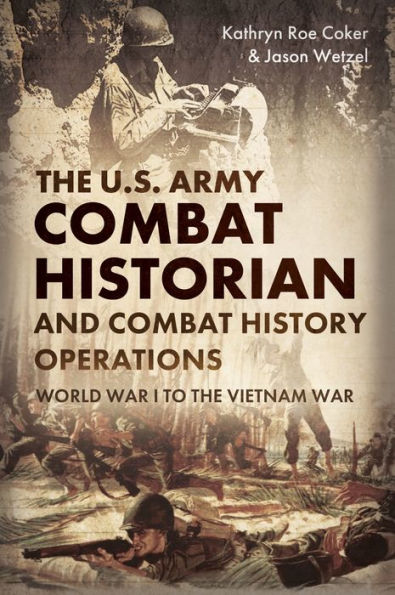
the U.S. Army Combat Historian and History Operations: World War I to Vietnam in Franklin, TN
Current price: $34.95
Barnes and Noble
the U.S. Army Combat Historian and History Operations: World War I to Vietnam in Franklin, TN
Current price: $34.95
Loading Inventory...
Size: Hardcover
"How is history useful for an operational commander or to soldiers in general? What role does history have for doctrine and training to the U.S. Army as an institution? These are questions this book answers as the authors narrate the development combat historian and the evolving role of combat historians as they develop history into a useful tool for informing training, operations, and doctrine development."—New York Journal of Books
In World War I, Major General Pershing proposed the idea of establishing a historical office within the AEF headquarters. The War Department reorganized the General Staff to include a Historical Branch. Evidence shows that soldiers acting as historians went "down range," albeit not into combat. By World War II, the situation had changed—whether S.L.A. Marshall's popping out of a billet in Sibret as a shells exploded on the road; Forrest Pogue's typing "on a little camp desk under an apple tree;" Chester Starr's terrain reconnaissance in the Mediterranean theater, or Ken Hechler's command of a fourman historical team interviewing soldiers at the Remagen Bridge and searching through secret documents—the World War II combat historians were there behind and on the front lines with a notebook in one hand and their carbine in the other hand, ever ready to collect battlefield information.
Eight historical service detachments were deployed to Korea. The youngest commander, 1st Lieutenant Bevin Alexander, noted "We were on the front lines the whole time . . . We would interview the people afterwards and create a battle study…." After the Korean War, the duties of the combat historian further evolved as what became the Center of Military History published doctrine about military history detachments (MHDs). As America’s immersion in Vietnam escalated, there was concern regarding historical coverage. Chief of Military History Brigadier General Hal Pattison established a network of historical teams to collect information on the U.S Army in the war. A major development in the history program and in deploying MHDs came with the establishment of Headquarters, U.S. Army Vietnam (USARV) under General William C. Westmoreland’s command. In 1965, the history office was organized at Headquarters, U.S. Army Vietnam (USARV). MHDs were deployed across Vietnam, conducting combat after action interviews, and collecting documents. This study focuses on U.S. Army historical programs during combat operations from World War I to the Vietnam War with particular attention on the combat historians, those individuals deployed to a theater of war with the mission of documenting the actions of that theater for current and future historical use.
In World War I, Major General Pershing proposed the idea of establishing a historical office within the AEF headquarters. The War Department reorganized the General Staff to include a Historical Branch. Evidence shows that soldiers acting as historians went "down range," albeit not into combat. By World War II, the situation had changed—whether S.L.A. Marshall's popping out of a billet in Sibret as a shells exploded on the road; Forrest Pogue's typing "on a little camp desk under an apple tree;" Chester Starr's terrain reconnaissance in the Mediterranean theater, or Ken Hechler's command of a fourman historical team interviewing soldiers at the Remagen Bridge and searching through secret documents—the World War II combat historians were there behind and on the front lines with a notebook in one hand and their carbine in the other hand, ever ready to collect battlefield information.
Eight historical service detachments were deployed to Korea. The youngest commander, 1st Lieutenant Bevin Alexander, noted "We were on the front lines the whole time . . . We would interview the people afterwards and create a battle study…." After the Korean War, the duties of the combat historian further evolved as what became the Center of Military History published doctrine about military history detachments (MHDs). As America’s immersion in Vietnam escalated, there was concern regarding historical coverage. Chief of Military History Brigadier General Hal Pattison established a network of historical teams to collect information on the U.S Army in the war. A major development in the history program and in deploying MHDs came with the establishment of Headquarters, U.S. Army Vietnam (USARV) under General William C. Westmoreland’s command. In 1965, the history office was organized at Headquarters, U.S. Army Vietnam (USARV). MHDs were deployed across Vietnam, conducting combat after action interviews, and collecting documents. This study focuses on U.S. Army historical programs during combat operations from World War I to the Vietnam War with particular attention on the combat historians, those individuals deployed to a theater of war with the mission of documenting the actions of that theater for current and future historical use.
"How is history useful for an operational commander or to soldiers in general? What role does history have for doctrine and training to the U.S. Army as an institution? These are questions this book answers as the authors narrate the development combat historian and the evolving role of combat historians as they develop history into a useful tool for informing training, operations, and doctrine development."—New York Journal of Books
In World War I, Major General Pershing proposed the idea of establishing a historical office within the AEF headquarters. The War Department reorganized the General Staff to include a Historical Branch. Evidence shows that soldiers acting as historians went "down range," albeit not into combat. By World War II, the situation had changed—whether S.L.A. Marshall's popping out of a billet in Sibret as a shells exploded on the road; Forrest Pogue's typing "on a little camp desk under an apple tree;" Chester Starr's terrain reconnaissance in the Mediterranean theater, or Ken Hechler's command of a fourman historical team interviewing soldiers at the Remagen Bridge and searching through secret documents—the World War II combat historians were there behind and on the front lines with a notebook in one hand and their carbine in the other hand, ever ready to collect battlefield information.
Eight historical service detachments were deployed to Korea. The youngest commander, 1st Lieutenant Bevin Alexander, noted "We were on the front lines the whole time . . . We would interview the people afterwards and create a battle study…." After the Korean War, the duties of the combat historian further evolved as what became the Center of Military History published doctrine about military history detachments (MHDs). As America’s immersion in Vietnam escalated, there was concern regarding historical coverage. Chief of Military History Brigadier General Hal Pattison established a network of historical teams to collect information on the U.S Army in the war. A major development in the history program and in deploying MHDs came with the establishment of Headquarters, U.S. Army Vietnam (USARV) under General William C. Westmoreland’s command. In 1965, the history office was organized at Headquarters, U.S. Army Vietnam (USARV). MHDs were deployed across Vietnam, conducting combat after action interviews, and collecting documents. This study focuses on U.S. Army historical programs during combat operations from World War I to the Vietnam War with particular attention on the combat historians, those individuals deployed to a theater of war with the mission of documenting the actions of that theater for current and future historical use.
In World War I, Major General Pershing proposed the idea of establishing a historical office within the AEF headquarters. The War Department reorganized the General Staff to include a Historical Branch. Evidence shows that soldiers acting as historians went "down range," albeit not into combat. By World War II, the situation had changed—whether S.L.A. Marshall's popping out of a billet in Sibret as a shells exploded on the road; Forrest Pogue's typing "on a little camp desk under an apple tree;" Chester Starr's terrain reconnaissance in the Mediterranean theater, or Ken Hechler's command of a fourman historical team interviewing soldiers at the Remagen Bridge and searching through secret documents—the World War II combat historians were there behind and on the front lines with a notebook in one hand and their carbine in the other hand, ever ready to collect battlefield information.
Eight historical service detachments were deployed to Korea. The youngest commander, 1st Lieutenant Bevin Alexander, noted "We were on the front lines the whole time . . . We would interview the people afterwards and create a battle study…." After the Korean War, the duties of the combat historian further evolved as what became the Center of Military History published doctrine about military history detachments (MHDs). As America’s immersion in Vietnam escalated, there was concern regarding historical coverage. Chief of Military History Brigadier General Hal Pattison established a network of historical teams to collect information on the U.S Army in the war. A major development in the history program and in deploying MHDs came with the establishment of Headquarters, U.S. Army Vietnam (USARV) under General William C. Westmoreland’s command. In 1965, the history office was organized at Headquarters, U.S. Army Vietnam (USARV). MHDs were deployed across Vietnam, conducting combat after action interviews, and collecting documents. This study focuses on U.S. Army historical programs during combat operations from World War I to the Vietnam War with particular attention on the combat historians, those individuals deployed to a theater of war with the mission of documenting the actions of that theater for current and future historical use.
You May Also Like










More About Barnes and Noble at CoolSprings Galleria
Barnes & Noble is the world’s largest retail bookseller and a leading retailer of content, digital media and educational products. Our Nook Digital business offers a lineup of NOOK® tablets and e-Readers and an expansive collection of digital reading content through the NOOK Store®. Barnes & Noble’s mission is to operate the best omni-channel specialty retail business in America, helping both our customers and booksellers reach their aspirations, while being a credit to the communities we serve.
1800 Galleria Blvd #1310, Franklin, TN 37067, United States
Find Barnes and Noble at CoolSprings Galleria in Franklin, TN
Visit Barnes and Noble at CoolSprings Galleria in Franklin, TN
