
Home
The Value of Human Life in Soviet Warfare
Barnes and Noble
Loading Inventory...
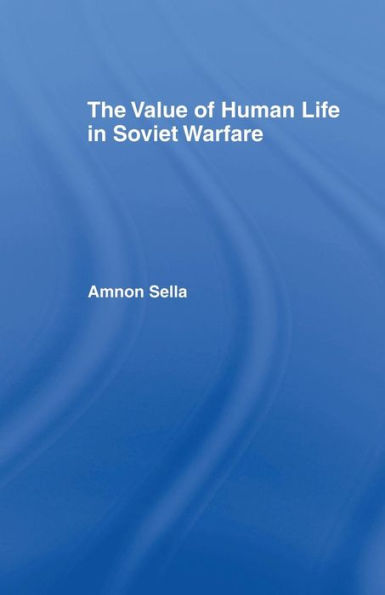
The Value of Human Life in Soviet Warfare in Franklin, TN
Current price: $61.99
Barnes and Noble
The Value of Human Life in Soviet Warfare in Franklin, TN
Current price: $61.99
Loading Inventory...
Size: OS
This is a key question for all Western military strategists. If the Soviets are indeed willing to tolerate high human sacrifice in warfare this obviously puts them at a military advantage. The perceived wisdom, hitherto, is that the Soviets are indeed willing to tolerate high casualties in battle - this, initial, view is reinforced by myths about Stalin clearing minefields by marching penal battalions across them.
Professor Sella, however, comes to a different conclusion. He surveys Soviet attitudes to the military-medical service; to its own prisoners of war; and to the ethos of fighting to the death, considering how attitudes have changed from Czarist times to the present. He concludes that the Soviets are less ready to tolerate massive sacrifices than has been supposed; but that this position stems as much from utilitarian-military logic as from compassion.
Professor Sella, however, comes to a different conclusion. He surveys Soviet attitudes to the military-medical service; to its own prisoners of war; and to the ethos of fighting to the death, considering how attitudes have changed from Czarist times to the present. He concludes that the Soviets are less ready to tolerate massive sacrifices than has been supposed; but that this position stems as much from utilitarian-military logic as from compassion.
This is a key question for all Western military strategists. If the Soviets are indeed willing to tolerate high human sacrifice in warfare this obviously puts them at a military advantage. The perceived wisdom, hitherto, is that the Soviets are indeed willing to tolerate high casualties in battle - this, initial, view is reinforced by myths about Stalin clearing minefields by marching penal battalions across them.
Professor Sella, however, comes to a different conclusion. He surveys Soviet attitudes to the military-medical service; to its own prisoners of war; and to the ethos of fighting to the death, considering how attitudes have changed from Czarist times to the present. He concludes that the Soviets are less ready to tolerate massive sacrifices than has been supposed; but that this position stems as much from utilitarian-military logic as from compassion.
Professor Sella, however, comes to a different conclusion. He surveys Soviet attitudes to the military-medical service; to its own prisoners of war; and to the ethos of fighting to the death, considering how attitudes have changed from Czarist times to the present. He concludes that the Soviets are less ready to tolerate massive sacrifices than has been supposed; but that this position stems as much from utilitarian-military logic as from compassion.
You May Also Like














More About Barnes and Noble at CoolSprings Galleria
Barnes & Noble is the world’s largest retail bookseller and a leading retailer of content, digital media and educational products. Our Nook Digital business offers a lineup of NOOK® tablets and e-Readers and an expansive collection of digital reading content through the NOOK Store®. Barnes & Noble’s mission is to operate the best omni-channel specialty retail business in America, helping both our customers and booksellers reach their aspirations, while being a credit to the communities we serve.
1800 Galleria Blvd #1310, Franklin, TN 37067, United States
Find Barnes and Noble at CoolSprings Galleria in Franklin, TN
Visit Barnes and Noble at CoolSprings Galleria in Franklin, TN
