
Home
the Witchcraft Delusion New England - Its Rise, Progress and Termination More Wonders of Invisible World With a Preface, Introductions Notes by Samuel G. Drake Volume III
Barnes and Noble
Loading Inventory...
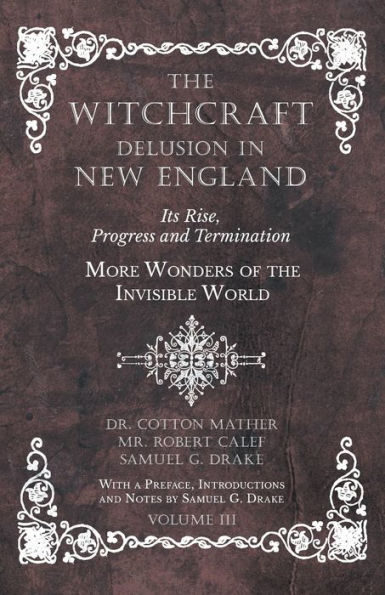
the Witchcraft Delusion New England - Its Rise, Progress and Termination More Wonders of Invisible World With a Preface, Introductions Notes by Samuel G. Drake Volume III in Franklin, TN
Current price: $27.99
Barnes and Noble
the Witchcraft Delusion New England - Its Rise, Progress and Termination More Wonders of Invisible World With a Preface, Introductions Notes by Samuel G. Drake Volume III in Franklin, TN
Current price: $27.99
Loading Inventory...
Size: Hardcover
The third and final volume of
The Witchcraft of New England
details the rise, development, and fall of Americans' belief in witchcraft, presenting both sides of the argument from opposing writers.
The Witchcraft Delusion in New England
is a combined publication of two opposing arguments regarding witchcraft, with specific reference to the Salem witch trials. This volume also features an analysis of occult practises.
Following the 1692-1693 Salem witch trials in New England, USA, a Puritan minister, Cotton Mather, compiled several accounts of witch hunts and trials in Massachusetts alongside his own sermons and published them in a book,
Wonders of the Invisible World
(1693), arguing that witches and devils are real and should be feared. In 1700, Robert Calef published
More Wonders of the Invisible World
, refuting Mather's ideas. This volume combines these books to present a balanced argument on witchcraft in America.
The Witchcraft of New England
details the rise, development, and fall of Americans' belief in witchcraft, presenting both sides of the argument from opposing writers.
The Witchcraft Delusion in New England
is a combined publication of two opposing arguments regarding witchcraft, with specific reference to the Salem witch trials. This volume also features an analysis of occult practises.
Following the 1692-1693 Salem witch trials in New England, USA, a Puritan minister, Cotton Mather, compiled several accounts of witch hunts and trials in Massachusetts alongside his own sermons and published them in a book,
Wonders of the Invisible World
(1693), arguing that witches and devils are real and should be feared. In 1700, Robert Calef published
More Wonders of the Invisible World
, refuting Mather's ideas. This volume combines these books to present a balanced argument on witchcraft in America.
The third and final volume of
The Witchcraft of New England
details the rise, development, and fall of Americans' belief in witchcraft, presenting both sides of the argument from opposing writers.
The Witchcraft Delusion in New England
is a combined publication of two opposing arguments regarding witchcraft, with specific reference to the Salem witch trials. This volume also features an analysis of occult practises.
Following the 1692-1693 Salem witch trials in New England, USA, a Puritan minister, Cotton Mather, compiled several accounts of witch hunts and trials in Massachusetts alongside his own sermons and published them in a book,
Wonders of the Invisible World
(1693), arguing that witches and devils are real and should be feared. In 1700, Robert Calef published
More Wonders of the Invisible World
, refuting Mather's ideas. This volume combines these books to present a balanced argument on witchcraft in America.
The Witchcraft of New England
details the rise, development, and fall of Americans' belief in witchcraft, presenting both sides of the argument from opposing writers.
The Witchcraft Delusion in New England
is a combined publication of two opposing arguments regarding witchcraft, with specific reference to the Salem witch trials. This volume also features an analysis of occult practises.
Following the 1692-1693 Salem witch trials in New England, USA, a Puritan minister, Cotton Mather, compiled several accounts of witch hunts and trials in Massachusetts alongside his own sermons and published them in a book,
Wonders of the Invisible World
(1693), arguing that witches and devils are real and should be feared. In 1700, Robert Calef published
More Wonders of the Invisible World
, refuting Mather's ideas. This volume combines these books to present a balanced argument on witchcraft in America.
You May Also Like

















More About Barnes and Noble at CoolSprings Galleria
Barnes & Noble is the world’s largest retail bookseller and a leading retailer of content, digital media and educational products. Our Nook Digital business offers a lineup of NOOK® tablets and e-Readers and an expansive collection of digital reading content through the NOOK Store®. Barnes & Noble’s mission is to operate the best omni-channel specialty retail business in America, helping both our customers and booksellers reach their aspirations, while being a credit to the communities we serve.
1800 Galleria Blvd #1310, Franklin, TN 37067, United States
Find Barnes and Noble at CoolSprings Galleria in Franklin, TN
Visit Barnes and Noble at CoolSprings Galleria in Franklin, TN
