
Home
the World Crisis and International Law: Knowledge Economy Battle for Future
Barnes and Noble
Loading Inventory...
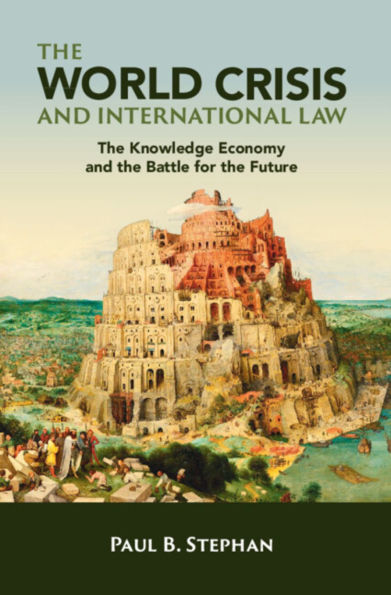
the World Crisis and International Law: Knowledge Economy Battle for Future in Franklin, TN
Current price: $95.00
Barnes and Noble
the World Crisis and International Law: Knowledge Economy Battle for Future in Franklin, TN
Current price: $95.00
Loading Inventory...
Size: Hardcover
The knowledge economy, a seeming wonder for the world, has caused unintended harms that threaten peace and prosperity and undo international cooperation and the international rule of law. The world faces threats of war, pandemics, growing domestic political discord, climate change, disruption of international trade and investment, immigration, and the pollution of cyberspace, just as international law increasingly falls short as a tool for managing these challenges. Prosperity dependent on meritocracy, open borders, international economic freedom, and a wide-open Internet has met its limits, with international law one of the first casualties. Any effective response to these threats must reflect the pathway by which these perils arrive. Part of the answer to these challenges, Paul B. Stephan argues, must include a re-conception of international law as arising out of pragmatic and limited experiments by states, rather than as grand projects to remake and redeem the world.
The knowledge economy, a seeming wonder for the world, has caused unintended harms that threaten peace and prosperity and undo international cooperation and the international rule of law. The world faces threats of war, pandemics, growing domestic political discord, climate change, disruption of international trade and investment, immigration, and the pollution of cyberspace, just as international law increasingly falls short as a tool for managing these challenges. Prosperity dependent on meritocracy, open borders, international economic freedom, and a wide-open Internet has met its limits, with international law one of the first casualties. Any effective response to these threats must reflect the pathway by which these perils arrive. Part of the answer to these challenges, Paul B. Stephan argues, must include a re-conception of international law as arising out of pragmatic and limited experiments by states, rather than as grand projects to remake and redeem the world.
You May Also Like








More About Barnes and Noble at CoolSprings Galleria
Barnes & Noble is the world’s largest retail bookseller and a leading retailer of content, digital media and educational products. Our Nook Digital business offers a lineup of NOOK® tablets and e-Readers and an expansive collection of digital reading content through the NOOK Store®. Barnes & Noble’s mission is to operate the best omni-channel specialty retail business in America, helping both our customers and booksellers reach their aspirations, while being a credit to the communities we serve.
1800 Galleria Blvd #1310, Franklin, TN 37067, United States
Find Barnes and Noble at CoolSprings Galleria in Franklin, TN
Visit Barnes and Noble at CoolSprings Galleria in Franklin, TN
