
Home
Theory for Strings Violin Book 1
Barnes and Noble
Loading Inventory...
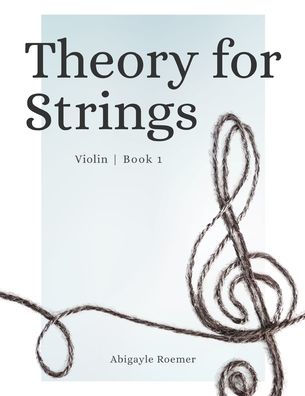
Theory for Strings Violin Book 1 in Franklin, TN
Current price: $11.99
Barnes and Noble
Theory for Strings Violin Book 1 in Franklin, TN
Current price: $11.99
Loading Inventory...
Size: OS
This workbook provides a priority-based music theory course designed to help string players learn how to read music as quickly and accurately as possible, while gaining a deeper understanding of the way the violin works and the "why" behind music theory concepts-all of which will be applicable towards more complex ideas as they continue their studies.
CONTENTS
HOW TO READ RHYTHMS
Reading Rhythmic Notation in 4/4 Meter
Clapping and Counting Quarter Notes, Half Notes, Whole Notes, 8th and 16th Notes
Subdivision
Dotted Rhythms
Clapping and Counting Rests
HOW TO READ NOTES
Musical Alphabet
Note Locations on the Treble Clef Staff
Steps and Skips
Half Steps and Whole Steps
Sharps, Flats and Naturals
Explaining "Low 2" and Other Finger Patterns
Locating any Note on the Fingerboard, in First Position
After completing, students should understand how to:
1. Subdivide, read, and write simple rhythms in 4/4 meter.
2. Understand key signatures and identify correct finger patterns for every string in a given key.
3. Locate any note on the fingerboard of the violin in first position, in keys up to 5 sharps or flats.
CONTENTS
HOW TO READ RHYTHMS
Reading Rhythmic Notation in 4/4 Meter
Clapping and Counting Quarter Notes, Half Notes, Whole Notes, 8th and 16th Notes
Subdivision
Dotted Rhythms
Clapping and Counting Rests
HOW TO READ NOTES
Musical Alphabet
Note Locations on the Treble Clef Staff
Steps and Skips
Half Steps and Whole Steps
Sharps, Flats and Naturals
Explaining "Low 2" and Other Finger Patterns
Locating any Note on the Fingerboard, in First Position
After completing, students should understand how to:
1. Subdivide, read, and write simple rhythms in 4/4 meter.
2. Understand key signatures and identify correct finger patterns for every string in a given key.
3. Locate any note on the fingerboard of the violin in first position, in keys up to 5 sharps or flats.
This workbook provides a priority-based music theory course designed to help string players learn how to read music as quickly and accurately as possible, while gaining a deeper understanding of the way the violin works and the "why" behind music theory concepts-all of which will be applicable towards more complex ideas as they continue their studies.
CONTENTS
HOW TO READ RHYTHMS
Reading Rhythmic Notation in 4/4 Meter
Clapping and Counting Quarter Notes, Half Notes, Whole Notes, 8th and 16th Notes
Subdivision
Dotted Rhythms
Clapping and Counting Rests
HOW TO READ NOTES
Musical Alphabet
Note Locations on the Treble Clef Staff
Steps and Skips
Half Steps and Whole Steps
Sharps, Flats and Naturals
Explaining "Low 2" and Other Finger Patterns
Locating any Note on the Fingerboard, in First Position
After completing, students should understand how to:
1. Subdivide, read, and write simple rhythms in 4/4 meter.
2. Understand key signatures and identify correct finger patterns for every string in a given key.
3. Locate any note on the fingerboard of the violin in first position, in keys up to 5 sharps or flats.
CONTENTS
HOW TO READ RHYTHMS
Reading Rhythmic Notation in 4/4 Meter
Clapping and Counting Quarter Notes, Half Notes, Whole Notes, 8th and 16th Notes
Subdivision
Dotted Rhythms
Clapping and Counting Rests
HOW TO READ NOTES
Musical Alphabet
Note Locations on the Treble Clef Staff
Steps and Skips
Half Steps and Whole Steps
Sharps, Flats and Naturals
Explaining "Low 2" and Other Finger Patterns
Locating any Note on the Fingerboard, in First Position
After completing, students should understand how to:
1. Subdivide, read, and write simple rhythms in 4/4 meter.
2. Understand key signatures and identify correct finger patterns for every string in a given key.
3. Locate any note on the fingerboard of the violin in first position, in keys up to 5 sharps or flats.
You May Also Like















More About Barnes and Noble at CoolSprings Galleria
Barnes & Noble is the world’s largest retail bookseller and a leading retailer of content, digital media and educational products. Our Nook Digital business offers a lineup of NOOK® tablets and e-Readers and an expansive collection of digital reading content through the NOOK Store®. Barnes & Noble’s mission is to operate the best omni-channel specialty retail business in America, helping both our customers and booksellers reach their aspirations, while being a credit to the communities we serve.
1800 Galleria Blvd #1310, Franklin, TN 37067, United States
Find Barnes and Noble at CoolSprings Galleria in Franklin, TN
Visit Barnes and Noble at CoolSprings Galleria in Franklin, TN
