
Home
Thinking Like Your Editor: How to Write Great Serious Nonfiction and Get It Published
Barnes and Noble
Loading Inventory...
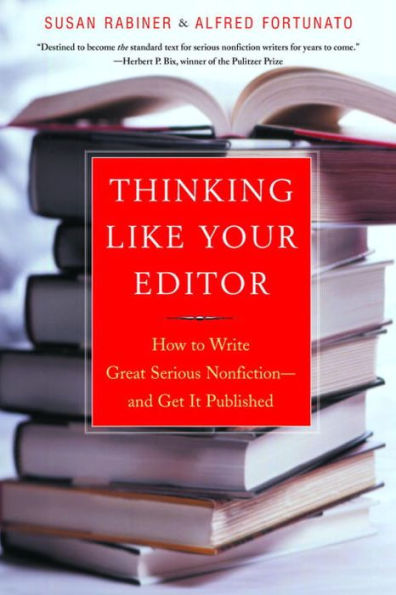
Thinking Like Your Editor: How to Write Great Serious Nonfiction and Get It Published in Franklin, TN
Current price: $17.95
Barnes and Noble
Thinking Like Your Editor: How to Write Great Serious Nonfiction and Get It Published in Franklin, TN
Current price: $17.95
Loading Inventory...
Size: Paperback
Distilled wisdom from two publishing pros for every serious nonfiction author in search of big commercial success.
Over 50,000 books are published in America each year, the vast majority nonfiction. Even so, many writers are stymied in getting their books published, never mind gaining significant attention for their ideas—and substantial sales. This is the book editors have been recommending to would-be authors. Filled with trade secrets,
Thinking Like Your Editor
explains:
• why every proposal should ask and answer five key questions;
• how to tailor academic writing to a general reader, without losing ideas or dumbing down your work;
• how to write a proposal that editors cannot ignore;
• why the most important chapter is your introduction;
• why "simple structure, complex ideas" is the mantra for creating serious nonfiction;
• why smart nonfiction editors regularly reject great writing but find new arguments irresistible.
Whatever the topic, from history to business, science to philosophy, law, or gender studies, this book is vital to every serious nonfiction writer.
Over 50,000 books are published in America each year, the vast majority nonfiction. Even so, many writers are stymied in getting their books published, never mind gaining significant attention for their ideas—and substantial sales. This is the book editors have been recommending to would-be authors. Filled with trade secrets,
Thinking Like Your Editor
explains:
• why every proposal should ask and answer five key questions;
• how to tailor academic writing to a general reader, without losing ideas or dumbing down your work;
• how to write a proposal that editors cannot ignore;
• why the most important chapter is your introduction;
• why "simple structure, complex ideas" is the mantra for creating serious nonfiction;
• why smart nonfiction editors regularly reject great writing but find new arguments irresistible.
Whatever the topic, from history to business, science to philosophy, law, or gender studies, this book is vital to every serious nonfiction writer.
Distilled wisdom from two publishing pros for every serious nonfiction author in search of big commercial success.
Over 50,000 books are published in America each year, the vast majority nonfiction. Even so, many writers are stymied in getting their books published, never mind gaining significant attention for their ideas—and substantial sales. This is the book editors have been recommending to would-be authors. Filled with trade secrets,
Thinking Like Your Editor
explains:
• why every proposal should ask and answer five key questions;
• how to tailor academic writing to a general reader, without losing ideas or dumbing down your work;
• how to write a proposal that editors cannot ignore;
• why the most important chapter is your introduction;
• why "simple structure, complex ideas" is the mantra for creating serious nonfiction;
• why smart nonfiction editors regularly reject great writing but find new arguments irresistible.
Whatever the topic, from history to business, science to philosophy, law, or gender studies, this book is vital to every serious nonfiction writer.
Over 50,000 books are published in America each year, the vast majority nonfiction. Even so, many writers are stymied in getting their books published, never mind gaining significant attention for their ideas—and substantial sales. This is the book editors have been recommending to would-be authors. Filled with trade secrets,
Thinking Like Your Editor
explains:
• why every proposal should ask and answer five key questions;
• how to tailor academic writing to a general reader, without losing ideas or dumbing down your work;
• how to write a proposal that editors cannot ignore;
• why the most important chapter is your introduction;
• why "simple structure, complex ideas" is the mantra for creating serious nonfiction;
• why smart nonfiction editors regularly reject great writing but find new arguments irresistible.
Whatever the topic, from history to business, science to philosophy, law, or gender studies, this book is vital to every serious nonfiction writer.
You May Also Like












More About Barnes and Noble at CoolSprings Galleria
Barnes & Noble is the world’s largest retail bookseller and a leading retailer of content, digital media and educational products. Our Nook Digital business offers a lineup of NOOK® tablets and e-Readers and an expansive collection of digital reading content through the NOOK Store®. Barnes & Noble’s mission is to operate the best omni-channel specialty retail business in America, helping both our customers and booksellers reach their aspirations, while being a credit to the communities we serve.
1800 Galleria Blvd #1310, Franklin, TN 37067, United States
Find Barnes and Noble at CoolSprings Galleria in Franklin, TN
Visit Barnes and Noble at CoolSprings Galleria in Franklin, TN
