
Home
Too Smart for Our Own Good: Ingenious Investment Strategies, Illusions of Safety, and Market Crashes
Barnes and Noble
Loading Inventory...
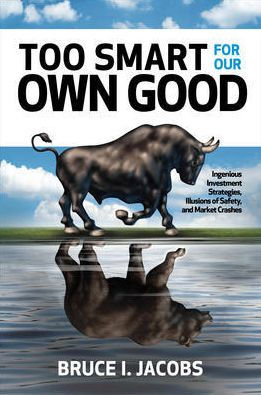
Too Smart for Our Own Good: Ingenious Investment Strategies, Illusions of Safety, and Market Crashes in Franklin, TN
Current price: $24.99
Barnes and Noble
Too Smart for Our Own Good: Ingenious Investment Strategies, Illusions of Safety, and Market Crashes in Franklin, TN
Current price: $24.99
Loading Inventory...
Size: Audiobook
How investment strategies designed to reduce risk can increase risk for everyone—and
can
crash markets and economies
Financial crises are often blamed on unforeseeable events, the unforgiving nature of capital markets, or just plain bad luck.
Too Smart for Our Own Good
argues that these crises are caused by certain alluring investment strategies that promise both high returns and safety of capital. In other words, the severe and widespread crises we have suffered in recent decades were not perfect storms. Instead, they were made by
us
. By understanding how and why this is so, we may be able to avoid or ameliorate future crises—and maybe even anticipate them.
One of today’s leading financial thinkers, Bruce I. Jacobs, examines recent financial crises—including the 1987 stock market crash, the 1998 collapse of the hedge fund Long-Term Capital Management, the 2007–2008 credit crisis, and the European debt crisis—and reveals the common threads that explain these market disruptions. In each case, investors in search of safety were drawn to novel strategies that were intended to reduce risk but actually magnified it—and blew up markets.
takes a behind-the-curtain look at:
•
The inseparable nature of investment risk and reward and the often counterproductive effects of some
popular
approaches for reducing risk
A trading strategy known as portfolio insurance and the key role it played in the 1987 stock market crash
How option-related trading disrupted markets in the decade following the 1987 crash
Why the demise of Long-Term Capital Management in 1998 wreaked havoc on US stock and bond markets
How mortgage-backed financial products, by shifting risk from one party to another, created the credit crisis
of
2007–2008 and contributed to the subsequent European debt crisis
This broad, detailed investigation of financial crises is the most penetrating and objective look at the subject to date. In addition, Jacobs, an industry insider, offers invaluable insights into the nature of investment risk and reward, and how to manage risk.
Risk is unavoidable—especially in investing—and financial markets connect us all. Until we accept these facts and manage risk in responsible ways, major crises will always be just around the bend.
is a big step toward smarter investing—and a better financial future for everyone.
can
crash markets and economies
Financial crises are often blamed on unforeseeable events, the unforgiving nature of capital markets, or just plain bad luck.
Too Smart for Our Own Good
argues that these crises are caused by certain alluring investment strategies that promise both high returns and safety of capital. In other words, the severe and widespread crises we have suffered in recent decades were not perfect storms. Instead, they were made by
us
. By understanding how and why this is so, we may be able to avoid or ameliorate future crises—and maybe even anticipate them.
One of today’s leading financial thinkers, Bruce I. Jacobs, examines recent financial crises—including the 1987 stock market crash, the 1998 collapse of the hedge fund Long-Term Capital Management, the 2007–2008 credit crisis, and the European debt crisis—and reveals the common threads that explain these market disruptions. In each case, investors in search of safety were drawn to novel strategies that were intended to reduce risk but actually magnified it—and blew up markets.
takes a behind-the-curtain look at:
•
The inseparable nature of investment risk and reward and the often counterproductive effects of some
popular
approaches for reducing risk
A trading strategy known as portfolio insurance and the key role it played in the 1987 stock market crash
How option-related trading disrupted markets in the decade following the 1987 crash
Why the demise of Long-Term Capital Management in 1998 wreaked havoc on US stock and bond markets
How mortgage-backed financial products, by shifting risk from one party to another, created the credit crisis
of
2007–2008 and contributed to the subsequent European debt crisis
This broad, detailed investigation of financial crises is the most penetrating and objective look at the subject to date. In addition, Jacobs, an industry insider, offers invaluable insights into the nature of investment risk and reward, and how to manage risk.
Risk is unavoidable—especially in investing—and financial markets connect us all. Until we accept these facts and manage risk in responsible ways, major crises will always be just around the bend.
is a big step toward smarter investing—and a better financial future for everyone.
How investment strategies designed to reduce risk can increase risk for everyone—and
can
crash markets and economies
Financial crises are often blamed on unforeseeable events, the unforgiving nature of capital markets, or just plain bad luck.
Too Smart for Our Own Good
argues that these crises are caused by certain alluring investment strategies that promise both high returns and safety of capital. In other words, the severe and widespread crises we have suffered in recent decades were not perfect storms. Instead, they were made by
us
. By understanding how and why this is so, we may be able to avoid or ameliorate future crises—and maybe even anticipate them.
One of today’s leading financial thinkers, Bruce I. Jacobs, examines recent financial crises—including the 1987 stock market crash, the 1998 collapse of the hedge fund Long-Term Capital Management, the 2007–2008 credit crisis, and the European debt crisis—and reveals the common threads that explain these market disruptions. In each case, investors in search of safety were drawn to novel strategies that were intended to reduce risk but actually magnified it—and blew up markets.
takes a behind-the-curtain look at:
•
The inseparable nature of investment risk and reward and the often counterproductive effects of some
popular
approaches for reducing risk
A trading strategy known as portfolio insurance and the key role it played in the 1987 stock market crash
How option-related trading disrupted markets in the decade following the 1987 crash
Why the demise of Long-Term Capital Management in 1998 wreaked havoc on US stock and bond markets
How mortgage-backed financial products, by shifting risk from one party to another, created the credit crisis
of
2007–2008 and contributed to the subsequent European debt crisis
This broad, detailed investigation of financial crises is the most penetrating and objective look at the subject to date. In addition, Jacobs, an industry insider, offers invaluable insights into the nature of investment risk and reward, and how to manage risk.
Risk is unavoidable—especially in investing—and financial markets connect us all. Until we accept these facts and manage risk in responsible ways, major crises will always be just around the bend.
is a big step toward smarter investing—and a better financial future for everyone.
can
crash markets and economies
Financial crises are often blamed on unforeseeable events, the unforgiving nature of capital markets, or just plain bad luck.
Too Smart for Our Own Good
argues that these crises are caused by certain alluring investment strategies that promise both high returns and safety of capital. In other words, the severe and widespread crises we have suffered in recent decades were not perfect storms. Instead, they were made by
us
. By understanding how and why this is so, we may be able to avoid or ameliorate future crises—and maybe even anticipate them.
One of today’s leading financial thinkers, Bruce I. Jacobs, examines recent financial crises—including the 1987 stock market crash, the 1998 collapse of the hedge fund Long-Term Capital Management, the 2007–2008 credit crisis, and the European debt crisis—and reveals the common threads that explain these market disruptions. In each case, investors in search of safety were drawn to novel strategies that were intended to reduce risk but actually magnified it—and blew up markets.
takes a behind-the-curtain look at:
•
The inseparable nature of investment risk and reward and the often counterproductive effects of some
popular
approaches for reducing risk
A trading strategy known as portfolio insurance and the key role it played in the 1987 stock market crash
How option-related trading disrupted markets in the decade following the 1987 crash
Why the demise of Long-Term Capital Management in 1998 wreaked havoc on US stock and bond markets
How mortgage-backed financial products, by shifting risk from one party to another, created the credit crisis
of
2007–2008 and contributed to the subsequent European debt crisis
This broad, detailed investigation of financial crises is the most penetrating and objective look at the subject to date. In addition, Jacobs, an industry insider, offers invaluable insights into the nature of investment risk and reward, and how to manage risk.
Risk is unavoidable—especially in investing—and financial markets connect us all. Until we accept these facts and manage risk in responsible ways, major crises will always be just around the bend.
is a big step toward smarter investing—and a better financial future for everyone.
You May Also Like














More About Barnes and Noble at CoolSprings Galleria
Barnes & Noble is the world’s largest retail bookseller and a leading retailer of content, digital media and educational products. Our Nook Digital business offers a lineup of NOOK® tablets and e-Readers and an expansive collection of digital reading content through the NOOK Store®. Barnes & Noble’s mission is to operate the best omni-channel specialty retail business in America, helping both our customers and booksellers reach their aspirations, while being a credit to the communities we serve.
1800 Galleria Blvd #1310, Franklin, TN 37067, United States
Find Barnes and Noble at CoolSprings Galleria in Franklin, TN
Visit Barnes and Noble at CoolSprings Galleria in Franklin, TN
