
Home
Topographical Intelligence and the American Civil War
Barnes and Noble
Loading Inventory...
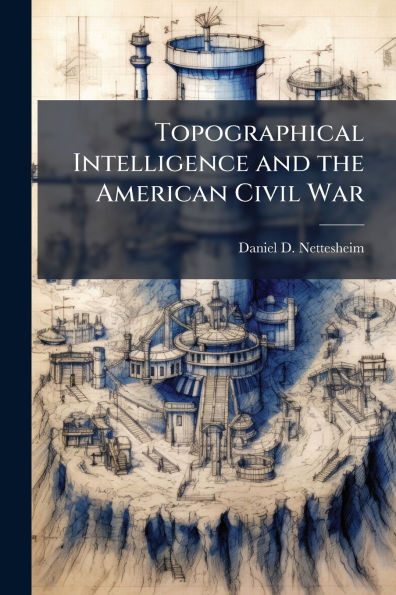
Topographical Intelligence and the American Civil War in Franklin, TN
Current price: $30.95
Barnes and Noble
Topographical Intelligence and the American Civil War in Franklin, TN
Current price: $30.95
Loading Inventory...
Size: Hardcover
This study analyzes the organizational approaches to meet topographical intelligence needs which evolved in the major Federal armies during the Civil War. Research reveals that a topographical problem existed in 1861 which had significant impact on Federal operations early in the war. The primary cause of inadequate military maps was the focus of the Corps of Topographical Engineers from 1816 to 1860. National leaders, as well as many Army generals and the military engineers themselves, supported strong emphasis on civil works and internal improvement. The nature of the war placed a premium on the North's need for maps. The geographic size of the theater and strategies of opposing commanders were key factors in determining the necessary degree of map detail. Three distinct approaches to the map problem emerged. In the East where large-scale maps were most important, little was accomplished by the Army of the Potomac as engineers were horded on the army-level staff and employed without functional distinction. This approach was consistent with precedence and pre-war doctrine. In the West, Grant decentralized his meager engineer assets in the Army of the Tennessee. His directives fostered centralized control and engineer focus on map work during critical phases of his campaigns with favorable results. Only the Army of the Cumberland developed a formal topographical organization extending from army to brigade level. Its system, with specialization as the cornerstone, was clearly superior to those of the other armies. Ironically, the formal merger of the two engineer corps in 1863 masked the system and reasons for its origin and success, many of which transcend the American Civil War.
This work has been selected by scholars as being culturally important, and is part of the knowledge base of civilization as we know it. This work was reproduced from the original artifact, and remains as true to the original work as possible. Therefore, you will see the original copyright references, library stamps (as most of these works have been housed in our most important libraries around the world), and other notations in the work.
This work is in the public domain in the United States of America, and possibly other nations. Within the United States, you may freely copy and distribute this work, as no entity (individual or corporate) has a copyright on the body of the work.
As a reproduction of a historical artifact, this work may contain missing or blurred pages, poor pictures, errant marks, etc. Scholars believe, and we concur, that this work is important enough to be preserved, reproduced, and made generally available to the public. We appreciate your support of the preservation process, and thank you for being an important part of keeping this knowledge alive and relevant.
This work has been selected by scholars as being culturally important, and is part of the knowledge base of civilization as we know it. This work was reproduced from the original artifact, and remains as true to the original work as possible. Therefore, you will see the original copyright references, library stamps (as most of these works have been housed in our most important libraries around the world), and other notations in the work.
This work is in the public domain in the United States of America, and possibly other nations. Within the United States, you may freely copy and distribute this work, as no entity (individual or corporate) has a copyright on the body of the work.
As a reproduction of a historical artifact, this work may contain missing or blurred pages, poor pictures, errant marks, etc. Scholars believe, and we concur, that this work is important enough to be preserved, reproduced, and made generally available to the public. We appreciate your support of the preservation process, and thank you for being an important part of keeping this knowledge alive and relevant.
This study analyzes the organizational approaches to meet topographical intelligence needs which evolved in the major Federal armies during the Civil War. Research reveals that a topographical problem existed in 1861 which had significant impact on Federal operations early in the war. The primary cause of inadequate military maps was the focus of the Corps of Topographical Engineers from 1816 to 1860. National leaders, as well as many Army generals and the military engineers themselves, supported strong emphasis on civil works and internal improvement. The nature of the war placed a premium on the North's need for maps. The geographic size of the theater and strategies of opposing commanders were key factors in determining the necessary degree of map detail. Three distinct approaches to the map problem emerged. In the East where large-scale maps were most important, little was accomplished by the Army of the Potomac as engineers were horded on the army-level staff and employed without functional distinction. This approach was consistent with precedence and pre-war doctrine. In the West, Grant decentralized his meager engineer assets in the Army of the Tennessee. His directives fostered centralized control and engineer focus on map work during critical phases of his campaigns with favorable results. Only the Army of the Cumberland developed a formal topographical organization extending from army to brigade level. Its system, with specialization as the cornerstone, was clearly superior to those of the other armies. Ironically, the formal merger of the two engineer corps in 1863 masked the system and reasons for its origin and success, many of which transcend the American Civil War.
This work has been selected by scholars as being culturally important, and is part of the knowledge base of civilization as we know it. This work was reproduced from the original artifact, and remains as true to the original work as possible. Therefore, you will see the original copyright references, library stamps (as most of these works have been housed in our most important libraries around the world), and other notations in the work.
This work is in the public domain in the United States of America, and possibly other nations. Within the United States, you may freely copy and distribute this work, as no entity (individual or corporate) has a copyright on the body of the work.
As a reproduction of a historical artifact, this work may contain missing or blurred pages, poor pictures, errant marks, etc. Scholars believe, and we concur, that this work is important enough to be preserved, reproduced, and made generally available to the public. We appreciate your support of the preservation process, and thank you for being an important part of keeping this knowledge alive and relevant.
This work has been selected by scholars as being culturally important, and is part of the knowledge base of civilization as we know it. This work was reproduced from the original artifact, and remains as true to the original work as possible. Therefore, you will see the original copyright references, library stamps (as most of these works have been housed in our most important libraries around the world), and other notations in the work.
This work is in the public domain in the United States of America, and possibly other nations. Within the United States, you may freely copy and distribute this work, as no entity (individual or corporate) has a copyright on the body of the work.
As a reproduction of a historical artifact, this work may contain missing or blurred pages, poor pictures, errant marks, etc. Scholars believe, and we concur, that this work is important enough to be preserved, reproduced, and made generally available to the public. We appreciate your support of the preservation process, and thank you for being an important part of keeping this knowledge alive and relevant.
You May Also Like








More About Barnes and Noble at CoolSprings Galleria
Barnes & Noble is the world’s largest retail bookseller and a leading retailer of content, digital media and educational products. Our Nook Digital business offers a lineup of NOOK® tablets and e-Readers and an expansive collection of digital reading content through the NOOK Store®. Barnes & Noble’s mission is to operate the best omni-channel specialty retail business in America, helping both our customers and booksellers reach their aspirations, while being a credit to the communities we serve.
1800 Galleria Blvd #1310, Franklin, TN 37067, United States
Find Barnes and Noble at CoolSprings Galleria in Franklin, TN
Visit Barnes and Noble at CoolSprings Galleria in Franklin, TN
