
Home
Translating Silent Cinema: Film History, National Culture, and The Roaring Twenties
Barnes and Noble
Loading Inventory...
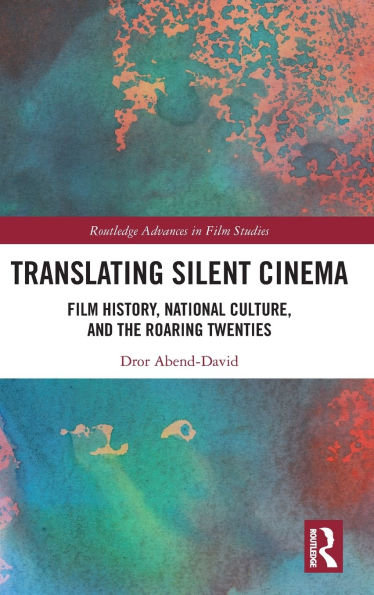
Translating Silent Cinema: Film History, National Culture, and The Roaring Twenties in Franklin, TN
Current price: $190.00
Barnes and Noble
Translating Silent Cinema: Film History, National Culture, and The Roaring Twenties in Franklin, TN
Current price: $190.00
Loading Inventory...
Size: Hardcover
Translating Silent Cinema
examines closely the translation, adaptation, and reception of three silent films in English, German, and Yiddish to argue that the study of film translation should extend beyond textual translation to a wide selection of primary materials and the consideration of social, economic, cultural, and historical contexts.
Close readings of
Der Kaufmann von Venedig
[
The Merchant of Venice
] (1923),
Das alte Gesetz
The Ancient Law
] (1923), and
Ost und West
East and West
] (1923) raise a theoretical question: Can we discuss films in the same way that we discuss theater productions, regarding each individual screening as a performance, and compose a “performance history” of different films? As no two film screenings are the same, the author highlights the importance of a multidisciplinary approach to translation that combines insights from film studies, translation studies, and cultural and historical contexts. Furthermore, in linguistic comparison and in the study of the reception of the films in each language, this book argues that each film is the subject of very different receptions under very different circumstances. It also analyzes the relevance of films that were made in Austria and in Germany during the 1920s on Jewish themes to a contemporary debate about immigration, racism, and discrimination.
This book’s pioneering analysis of the study of film translation encompasses a wide context of multiplicity of ideologies, economic interests, and historical contexts. It will be of interest for readers in translation studies (particularly in audiovisual translation), film studies, German studies (and German cinema), and Jewish studies (and cinema).
examines closely the translation, adaptation, and reception of three silent films in English, German, and Yiddish to argue that the study of film translation should extend beyond textual translation to a wide selection of primary materials and the consideration of social, economic, cultural, and historical contexts.
Close readings of
Der Kaufmann von Venedig
[
The Merchant of Venice
] (1923),
Das alte Gesetz
The Ancient Law
] (1923), and
Ost und West
East and West
] (1923) raise a theoretical question: Can we discuss films in the same way that we discuss theater productions, regarding each individual screening as a performance, and compose a “performance history” of different films? As no two film screenings are the same, the author highlights the importance of a multidisciplinary approach to translation that combines insights from film studies, translation studies, and cultural and historical contexts. Furthermore, in linguistic comparison and in the study of the reception of the films in each language, this book argues that each film is the subject of very different receptions under very different circumstances. It also analyzes the relevance of films that were made in Austria and in Germany during the 1920s on Jewish themes to a contemporary debate about immigration, racism, and discrimination.
This book’s pioneering analysis of the study of film translation encompasses a wide context of multiplicity of ideologies, economic interests, and historical contexts. It will be of interest for readers in translation studies (particularly in audiovisual translation), film studies, German studies (and German cinema), and Jewish studies (and cinema).
Translating Silent Cinema
examines closely the translation, adaptation, and reception of three silent films in English, German, and Yiddish to argue that the study of film translation should extend beyond textual translation to a wide selection of primary materials and the consideration of social, economic, cultural, and historical contexts.
Close readings of
Der Kaufmann von Venedig
[
The Merchant of Venice
] (1923),
Das alte Gesetz
The Ancient Law
] (1923), and
Ost und West
East and West
] (1923) raise a theoretical question: Can we discuss films in the same way that we discuss theater productions, regarding each individual screening as a performance, and compose a “performance history” of different films? As no two film screenings are the same, the author highlights the importance of a multidisciplinary approach to translation that combines insights from film studies, translation studies, and cultural and historical contexts. Furthermore, in linguistic comparison and in the study of the reception of the films in each language, this book argues that each film is the subject of very different receptions under very different circumstances. It also analyzes the relevance of films that were made in Austria and in Germany during the 1920s on Jewish themes to a contemporary debate about immigration, racism, and discrimination.
This book’s pioneering analysis of the study of film translation encompasses a wide context of multiplicity of ideologies, economic interests, and historical contexts. It will be of interest for readers in translation studies (particularly in audiovisual translation), film studies, German studies (and German cinema), and Jewish studies (and cinema).
examines closely the translation, adaptation, and reception of three silent films in English, German, and Yiddish to argue that the study of film translation should extend beyond textual translation to a wide selection of primary materials and the consideration of social, economic, cultural, and historical contexts.
Close readings of
Der Kaufmann von Venedig
[
The Merchant of Venice
] (1923),
Das alte Gesetz
The Ancient Law
] (1923), and
Ost und West
East and West
] (1923) raise a theoretical question: Can we discuss films in the same way that we discuss theater productions, regarding each individual screening as a performance, and compose a “performance history” of different films? As no two film screenings are the same, the author highlights the importance of a multidisciplinary approach to translation that combines insights from film studies, translation studies, and cultural and historical contexts. Furthermore, in linguistic comparison and in the study of the reception of the films in each language, this book argues that each film is the subject of very different receptions under very different circumstances. It also analyzes the relevance of films that were made in Austria and in Germany during the 1920s on Jewish themes to a contemporary debate about immigration, racism, and discrimination.
This book’s pioneering analysis of the study of film translation encompasses a wide context of multiplicity of ideologies, economic interests, and historical contexts. It will be of interest for readers in translation studies (particularly in audiovisual translation), film studies, German studies (and German cinema), and Jewish studies (and cinema).
You May Also Like













More About Barnes and Noble at CoolSprings Galleria
Barnes & Noble is the world’s largest retail bookseller and a leading retailer of content, digital media and educational products. Our Nook Digital business offers a lineup of NOOK® tablets and e-Readers and an expansive collection of digital reading content through the NOOK Store®. Barnes & Noble’s mission is to operate the best omni-channel specialty retail business in America, helping both our customers and booksellers reach their aspirations, while being a credit to the communities we serve.
1800 Galleria Blvd #1310, Franklin, TN 37067, United States
Find Barnes and Noble at CoolSprings Galleria in Franklin, TN
Visit Barnes and Noble at CoolSprings Galleria in Franklin, TN
