
Home
Ultramontanism and Tradition: the Role of Papal Authority Catholic Faith
Barnes and Noble
Loading Inventory...
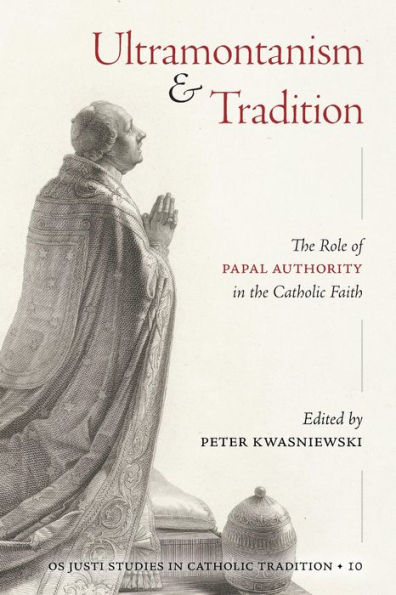
Ultramontanism and Tradition: the Role of Papal Authority Catholic Faith in Franklin, TN
Current price: $39.00
Barnes and Noble
Ultramontanism and Tradition: the Role of Papal Authority Catholic Faith in Franklin, TN
Current price: $39.00
Loading Inventory...
Size: Hardcover
With contributions by
Raymond Leo Cardinal Burke - Bishop Athanasius Schneider - Phillip Campbell - Stuart Chessman - Charles A. Coulombe - Roberto de Mattei - Edward Feser - Timothy S. Flanders - Rémi Fontaine - A Friar of the Order of Preachers - Matt Gaspers - Jeremy Holmes - John P. Joy - Robert W. Keim - John Lamont - Sebastian Morello - Martin Mosebach - Clemens Victor Oldendorf - Thomas Pink - Enrico Roccagiachini - Eric Sammons - Joseph Shaw - Henry Sire - Thomas Sternberg - Darrick Taylor - José A. Ureta
It is not possible to understand the crisis in the modern Catholic Church, much less see how it might be overcome, without a critical understanding of the ecclesial current known as ultramontanism. Originating with nineteenth-century conservatives rallying to the anti-Liberalism of Pius IX, it developed over time into a hyperpapalism that weakened subsidiarity, stifled local custom, and dismantled tradition, until with Pope Francis it has morphed into a veritable engine of progressivism.
What are the historical, theological, and cultural causes of this complex phenomenon-at once a quasi-doctrine, an attitude, and a political regime? Is an ultramontanist papacy the source of our ills or their only possible remedy (or perhaps both, since "the corruption of the best is the worst")? Might there be a "spirit of Vatican I" as harmful, in its own way, as the later and rightly denigrated "spirit of Vatican II"? Can a pope be a heretic, and what, if anything, may be done when such an evil confronts the Church? What is the relationship between moral authority and coercive power? Between papacy and episcopacy? Between legal positivism, blind obedience, and clerical abuse (sexual and otherwise)? In the face of pontifical monarchy, do churches sui iuris, organized communities, subordinate rulers, baptized faithful, immemorial traditions, time-honored liturgies, (still) enjoy their own inviolable rights?
These and related questions are deftly addressed by twenty-six scholars in an anthology of the best of conservative and traditional writing on these controversial topics.
Raymond Leo Cardinal Burke - Bishop Athanasius Schneider - Phillip Campbell - Stuart Chessman - Charles A. Coulombe - Roberto de Mattei - Edward Feser - Timothy S. Flanders - Rémi Fontaine - A Friar of the Order of Preachers - Matt Gaspers - Jeremy Holmes - John P. Joy - Robert W. Keim - John Lamont - Sebastian Morello - Martin Mosebach - Clemens Victor Oldendorf - Thomas Pink - Enrico Roccagiachini - Eric Sammons - Joseph Shaw - Henry Sire - Thomas Sternberg - Darrick Taylor - José A. Ureta
It is not possible to understand the crisis in the modern Catholic Church, much less see how it might be overcome, without a critical understanding of the ecclesial current known as ultramontanism. Originating with nineteenth-century conservatives rallying to the anti-Liberalism of Pius IX, it developed over time into a hyperpapalism that weakened subsidiarity, stifled local custom, and dismantled tradition, until with Pope Francis it has morphed into a veritable engine of progressivism.
What are the historical, theological, and cultural causes of this complex phenomenon-at once a quasi-doctrine, an attitude, and a political regime? Is an ultramontanist papacy the source of our ills or their only possible remedy (or perhaps both, since "the corruption of the best is the worst")? Might there be a "spirit of Vatican I" as harmful, in its own way, as the later and rightly denigrated "spirit of Vatican II"? Can a pope be a heretic, and what, if anything, may be done when such an evil confronts the Church? What is the relationship between moral authority and coercive power? Between papacy and episcopacy? Between legal positivism, blind obedience, and clerical abuse (sexual and otherwise)? In the face of pontifical monarchy, do churches sui iuris, organized communities, subordinate rulers, baptized faithful, immemorial traditions, time-honored liturgies, (still) enjoy their own inviolable rights?
These and related questions are deftly addressed by twenty-six scholars in an anthology of the best of conservative and traditional writing on these controversial topics.
With contributions by
Raymond Leo Cardinal Burke - Bishop Athanasius Schneider - Phillip Campbell - Stuart Chessman - Charles A. Coulombe - Roberto de Mattei - Edward Feser - Timothy S. Flanders - Rémi Fontaine - A Friar of the Order of Preachers - Matt Gaspers - Jeremy Holmes - John P. Joy - Robert W. Keim - John Lamont - Sebastian Morello - Martin Mosebach - Clemens Victor Oldendorf - Thomas Pink - Enrico Roccagiachini - Eric Sammons - Joseph Shaw - Henry Sire - Thomas Sternberg - Darrick Taylor - José A. Ureta
It is not possible to understand the crisis in the modern Catholic Church, much less see how it might be overcome, without a critical understanding of the ecclesial current known as ultramontanism. Originating with nineteenth-century conservatives rallying to the anti-Liberalism of Pius IX, it developed over time into a hyperpapalism that weakened subsidiarity, stifled local custom, and dismantled tradition, until with Pope Francis it has morphed into a veritable engine of progressivism.
What are the historical, theological, and cultural causes of this complex phenomenon-at once a quasi-doctrine, an attitude, and a political regime? Is an ultramontanist papacy the source of our ills or their only possible remedy (or perhaps both, since "the corruption of the best is the worst")? Might there be a "spirit of Vatican I" as harmful, in its own way, as the later and rightly denigrated "spirit of Vatican II"? Can a pope be a heretic, and what, if anything, may be done when such an evil confronts the Church? What is the relationship between moral authority and coercive power? Between papacy and episcopacy? Between legal positivism, blind obedience, and clerical abuse (sexual and otherwise)? In the face of pontifical monarchy, do churches sui iuris, organized communities, subordinate rulers, baptized faithful, immemorial traditions, time-honored liturgies, (still) enjoy their own inviolable rights?
These and related questions are deftly addressed by twenty-six scholars in an anthology of the best of conservative and traditional writing on these controversial topics.
Raymond Leo Cardinal Burke - Bishop Athanasius Schneider - Phillip Campbell - Stuart Chessman - Charles A. Coulombe - Roberto de Mattei - Edward Feser - Timothy S. Flanders - Rémi Fontaine - A Friar of the Order of Preachers - Matt Gaspers - Jeremy Holmes - John P. Joy - Robert W. Keim - John Lamont - Sebastian Morello - Martin Mosebach - Clemens Victor Oldendorf - Thomas Pink - Enrico Roccagiachini - Eric Sammons - Joseph Shaw - Henry Sire - Thomas Sternberg - Darrick Taylor - José A. Ureta
It is not possible to understand the crisis in the modern Catholic Church, much less see how it might be overcome, without a critical understanding of the ecclesial current known as ultramontanism. Originating with nineteenth-century conservatives rallying to the anti-Liberalism of Pius IX, it developed over time into a hyperpapalism that weakened subsidiarity, stifled local custom, and dismantled tradition, until with Pope Francis it has morphed into a veritable engine of progressivism.
What are the historical, theological, and cultural causes of this complex phenomenon-at once a quasi-doctrine, an attitude, and a political regime? Is an ultramontanist papacy the source of our ills or their only possible remedy (or perhaps both, since "the corruption of the best is the worst")? Might there be a "spirit of Vatican I" as harmful, in its own way, as the later and rightly denigrated "spirit of Vatican II"? Can a pope be a heretic, and what, if anything, may be done when such an evil confronts the Church? What is the relationship between moral authority and coercive power? Between papacy and episcopacy? Between legal positivism, blind obedience, and clerical abuse (sexual and otherwise)? In the face of pontifical monarchy, do churches sui iuris, organized communities, subordinate rulers, baptized faithful, immemorial traditions, time-honored liturgies, (still) enjoy their own inviolable rights?
These and related questions are deftly addressed by twenty-six scholars in an anthology of the best of conservative and traditional writing on these controversial topics.
You May Also Like









More About Barnes and Noble at CoolSprings Galleria
Barnes & Noble is the world’s largest retail bookseller and a leading retailer of content, digital media and educational products. Our Nook Digital business offers a lineup of NOOK® tablets and e-Readers and an expansive collection of digital reading content through the NOOK Store®. Barnes & Noble’s mission is to operate the best omni-channel specialty retail business in America, helping both our customers and booksellers reach their aspirations, while being a credit to the communities we serve.
1800 Galleria Blvd #1310, Franklin, TN 37067, United States
Find Barnes and Noble at CoolSprings Galleria in Franklin, TN
Visit Barnes and Noble at CoolSprings Galleria in Franklin, TN