
Home
Under the Nuclear Shadow: China's Information-Age Weapons International Security
Barnes and Noble
Loading Inventory...
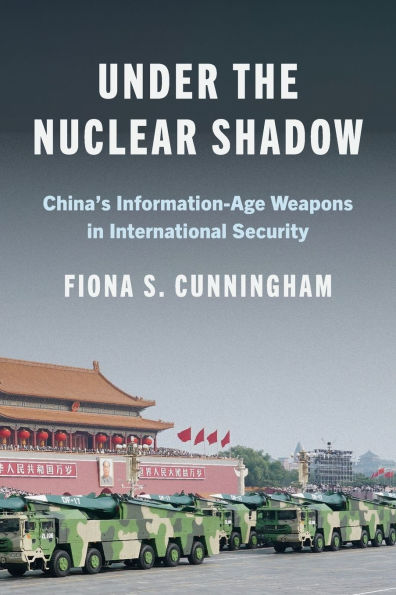
Under the Nuclear Shadow: China's Information-Age Weapons International Security in Franklin, TN
Current price: $99.95
Barnes and Noble
Under the Nuclear Shadow: China's Information-Age Weapons International Security in Franklin, TN
Current price: $99.95
Loading Inventory...
Size: Hardcover
How and why China has pursued informationage weapons to gain leverage against its adversaries
How can states use military force to achieve their political aims without triggering a catastrophic nuclear war? Among the states facing this dilemma of fighting limited wars, only China has given informationage weapons such a prominent role. While other countries have preferred the traditional options of threatening to use nuclear weapons or fielding capabilities for decisive conventional military victories, China has instead chosen to rely on offensive cyber operations, counterspace capabilities, and precision conventional missiles to coerce its adversaries. In
Under the Nuclear Shadow
, Fiona Cunningham examines this distinctive aspect of China’s post–Cold War deterrence strategy, developing an original theory of “strategic substitution.” When crises with the United States highlighted the inadequacy of China’s existing military capabilities, Cunningham argues, China pursued informationage weapons that promised to rapidly provide credible leverage against adversaries.
Drawing on hundreds of original Chineselanguage sources and interviews with security experts in China, Cunningham provides a rare and candid glimpse from Beijing into the informationage technologies that are reshaping how states gain leverage in the twentyfirst century. She offers unprecedented insights into the trajectory of China’s military modernization, as she details the strengths and weaknesses of China’s strategic substitution approach.
also looks ahead at the uncertain future of China’s strategic substitution approach and briefly explores too how other states might seize upon the promise of emerging technologies to address weaknesses in their own military strategies.
How can states use military force to achieve their political aims without triggering a catastrophic nuclear war? Among the states facing this dilemma of fighting limited wars, only China has given informationage weapons such a prominent role. While other countries have preferred the traditional options of threatening to use nuclear weapons or fielding capabilities for decisive conventional military victories, China has instead chosen to rely on offensive cyber operations, counterspace capabilities, and precision conventional missiles to coerce its adversaries. In
Under the Nuclear Shadow
, Fiona Cunningham examines this distinctive aspect of China’s post–Cold War deterrence strategy, developing an original theory of “strategic substitution.” When crises with the United States highlighted the inadequacy of China’s existing military capabilities, Cunningham argues, China pursued informationage weapons that promised to rapidly provide credible leverage against adversaries.
Drawing on hundreds of original Chineselanguage sources and interviews with security experts in China, Cunningham provides a rare and candid glimpse from Beijing into the informationage technologies that are reshaping how states gain leverage in the twentyfirst century. She offers unprecedented insights into the trajectory of China’s military modernization, as she details the strengths and weaknesses of China’s strategic substitution approach.
also looks ahead at the uncertain future of China’s strategic substitution approach and briefly explores too how other states might seize upon the promise of emerging technologies to address weaknesses in their own military strategies.
How and why China has pursued informationage weapons to gain leverage against its adversaries
How can states use military force to achieve their political aims without triggering a catastrophic nuclear war? Among the states facing this dilemma of fighting limited wars, only China has given informationage weapons such a prominent role. While other countries have preferred the traditional options of threatening to use nuclear weapons or fielding capabilities for decisive conventional military victories, China has instead chosen to rely on offensive cyber operations, counterspace capabilities, and precision conventional missiles to coerce its adversaries. In
Under the Nuclear Shadow
, Fiona Cunningham examines this distinctive aspect of China’s post–Cold War deterrence strategy, developing an original theory of “strategic substitution.” When crises with the United States highlighted the inadequacy of China’s existing military capabilities, Cunningham argues, China pursued informationage weapons that promised to rapidly provide credible leverage against adversaries.
Drawing on hundreds of original Chineselanguage sources and interviews with security experts in China, Cunningham provides a rare and candid glimpse from Beijing into the informationage technologies that are reshaping how states gain leverage in the twentyfirst century. She offers unprecedented insights into the trajectory of China’s military modernization, as she details the strengths and weaknesses of China’s strategic substitution approach.
also looks ahead at the uncertain future of China’s strategic substitution approach and briefly explores too how other states might seize upon the promise of emerging technologies to address weaknesses in their own military strategies.
How can states use military force to achieve their political aims without triggering a catastrophic nuclear war? Among the states facing this dilemma of fighting limited wars, only China has given informationage weapons such a prominent role. While other countries have preferred the traditional options of threatening to use nuclear weapons or fielding capabilities for decisive conventional military victories, China has instead chosen to rely on offensive cyber operations, counterspace capabilities, and precision conventional missiles to coerce its adversaries. In
Under the Nuclear Shadow
, Fiona Cunningham examines this distinctive aspect of China’s post–Cold War deterrence strategy, developing an original theory of “strategic substitution.” When crises with the United States highlighted the inadequacy of China’s existing military capabilities, Cunningham argues, China pursued informationage weapons that promised to rapidly provide credible leverage against adversaries.
Drawing on hundreds of original Chineselanguage sources and interviews with security experts in China, Cunningham provides a rare and candid glimpse from Beijing into the informationage technologies that are reshaping how states gain leverage in the twentyfirst century. She offers unprecedented insights into the trajectory of China’s military modernization, as she details the strengths and weaknesses of China’s strategic substitution approach.
also looks ahead at the uncertain future of China’s strategic substitution approach and briefly explores too how other states might seize upon the promise of emerging technologies to address weaknesses in their own military strategies.
You May Also Like












More About Barnes and Noble at CoolSprings Galleria
Barnes & Noble is the world’s largest retail bookseller and a leading retailer of content, digital media and educational products. Our Nook Digital business offers a lineup of NOOK® tablets and e-Readers and an expansive collection of digital reading content through the NOOK Store®. Barnes & Noble’s mission is to operate the best omni-channel specialty retail business in America, helping both our customers and booksellers reach their aspirations, while being a credit to the communities we serve.
1800 Galleria Blvd #1310, Franklin, TN 37067, United States
Find Barnes and Noble at CoolSprings Galleria in Franklin, TN
Visit Barnes and Noble at CoolSprings Galleria in Franklin, TN
