
Home
Vikings in Early Medieval Ireland: Church-Raiding, Politics and Kingship
Barnes and Noble
Loading Inventory...
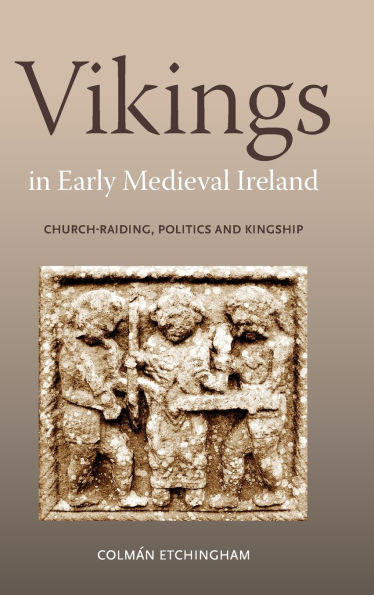
Vikings in Early Medieval Ireland: Church-Raiding, Politics and Kingship in Franklin, TN
Current price: $190.00
Barnes and Noble
Vikings in Early Medieval Ireland: Church-Raiding, Politics and Kingship in Franklin, TN
Current price: $190.00
Loading Inventory...
Size: OS
Illuminates the dynamics of church raiding by Vikings in Ireland, relating this phenomenon to their wider objectives and political ambitions.
This book offers the first comprehensive investigation of Viking raids on Irish churches from the late eighth to the early eleventh century, drawing on a wide range of sources, including Irish legal and literary material, archaeological and historical evidence and English and Frankish chronicles. Through a rigorous quantitative analysis of annalistic evidence, it sheds light on all aspects of this phenomenon: its chronological development, geographical distribution, immediate purpose and the broader context of Viking engagement with Gaelic Irish royal polities. Challenging the view that such raiding was merely a precursor to settlement and trade, it demonstrates that these attacks remained intrinsic to Viking activities throughout this period; it argues in particular that human captivesrather than metalwork or bullionconstituted the primary objective of church raids, with many held for ransom or sold into slavery. By tracing the evolution of random raids to strategically motivated attacks, it establishes church raiding as a deliberate instrument of political strategy, until the Battle of Clontarf (1014) marked a turning point in VikingIrish relations.
This book offers the first comprehensive investigation of Viking raids on Irish churches from the late eighth to the early eleventh century, drawing on a wide range of sources, including Irish legal and literary material, archaeological and historical evidence and English and Frankish chronicles. Through a rigorous quantitative analysis of annalistic evidence, it sheds light on all aspects of this phenomenon: its chronological development, geographical distribution, immediate purpose and the broader context of Viking engagement with Gaelic Irish royal polities. Challenging the view that such raiding was merely a precursor to settlement and trade, it demonstrates that these attacks remained intrinsic to Viking activities throughout this period; it argues in particular that human captivesrather than metalwork or bullionconstituted the primary objective of church raids, with many held for ransom or sold into slavery. By tracing the evolution of random raids to strategically motivated attacks, it establishes church raiding as a deliberate instrument of political strategy, until the Battle of Clontarf (1014) marked a turning point in VikingIrish relations.
Illuminates the dynamics of church raiding by Vikings in Ireland, relating this phenomenon to their wider objectives and political ambitions.
This book offers the first comprehensive investigation of Viking raids on Irish churches from the late eighth to the early eleventh century, drawing on a wide range of sources, including Irish legal and literary material, archaeological and historical evidence and English and Frankish chronicles. Through a rigorous quantitative analysis of annalistic evidence, it sheds light on all aspects of this phenomenon: its chronological development, geographical distribution, immediate purpose and the broader context of Viking engagement with Gaelic Irish royal polities. Challenging the view that such raiding was merely a precursor to settlement and trade, it demonstrates that these attacks remained intrinsic to Viking activities throughout this period; it argues in particular that human captivesrather than metalwork or bullionconstituted the primary objective of church raids, with many held for ransom or sold into slavery. By tracing the evolution of random raids to strategically motivated attacks, it establishes church raiding as a deliberate instrument of political strategy, until the Battle of Clontarf (1014) marked a turning point in VikingIrish relations.
This book offers the first comprehensive investigation of Viking raids on Irish churches from the late eighth to the early eleventh century, drawing on a wide range of sources, including Irish legal and literary material, archaeological and historical evidence and English and Frankish chronicles. Through a rigorous quantitative analysis of annalistic evidence, it sheds light on all aspects of this phenomenon: its chronological development, geographical distribution, immediate purpose and the broader context of Viking engagement with Gaelic Irish royal polities. Challenging the view that such raiding was merely a precursor to settlement and trade, it demonstrates that these attacks remained intrinsic to Viking activities throughout this period; it argues in particular that human captivesrather than metalwork or bullionconstituted the primary objective of church raids, with many held for ransom or sold into slavery. By tracing the evolution of random raids to strategically motivated attacks, it establishes church raiding as a deliberate instrument of political strategy, until the Battle of Clontarf (1014) marked a turning point in VikingIrish relations.
You May Also Like









More About Barnes and Noble at CoolSprings Galleria
Barnes & Noble is the world’s largest retail bookseller and a leading retailer of content, digital media and educational products. Our Nook Digital business offers a lineup of NOOK® tablets and e-Readers and an expansive collection of digital reading content through the NOOK Store®. Barnes & Noble’s mission is to operate the best omni-channel specialty retail business in America, helping both our customers and booksellers reach their aspirations, while being a credit to the communities we serve.
1800 Galleria Blvd #1310, Franklin, TN 37067, United States
Find Barnes and Noble at CoolSprings Galleria in Franklin, TN
Visit Barnes and Noble at CoolSprings Galleria in Franklin, TN
