
Home
Vulnerable Subjects: Ethics and Life Writing
Barnes and Noble
Loading Inventory...
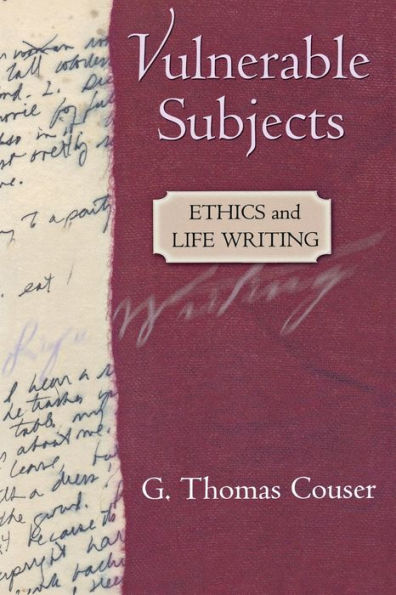
Vulnerable Subjects: Ethics and Life Writing in Franklin, TN
Current price: $42.95
Barnes and Noble
Vulnerable Subjects: Ethics and Life Writing in Franklin, TN
Current price: $42.95
Loading Inventory...
Size: OS
"My primary concern is with the ethics of representing vulnerable subjects—persons who are liable to exposure by someone with whom they are involved in an intimate or trustbased relationship, unable to represent themselves in writing, or unable to offer meaningful consent to their representation by someone else.... Of primary importance is intimate life writing—that done within families or couples, close relationships, or quasiprofessional relationships that involve trust—rather than conventional biography, which can be written by a stranger. The closer the relationship between writer and subject, the greater the vulnerability or dependency of the subject, the higher the ethical stakes, and the more urgent the need for ethical scrutiny."—from the Preface
Vulnerable Subjects
explores a range of lifewriting scenariosfrom the "celebrity" to the "ethnographic"—and a number of lifewriting genres from parental memoir to literary case studies by Oliver Sacks. G. Thomas Couser addresses complex contemporary issues; he investigates the role of disability in narratives of euthanasia and explores the implications of the Human Genome Project for lifewriting practices in any age when many regard DNA as a code that "scripts" lives and shapes identity. Throughout, his book is concerned with the ethical implications of the political and economic, as well as the mimetic, aspects of life writing.
Vulnerable Subjects
explores a range of lifewriting scenariosfrom the "celebrity" to the "ethnographic"—and a number of lifewriting genres from parental memoir to literary case studies by Oliver Sacks. G. Thomas Couser addresses complex contemporary issues; he investigates the role of disability in narratives of euthanasia and explores the implications of the Human Genome Project for lifewriting practices in any age when many regard DNA as a code that "scripts" lives and shapes identity. Throughout, his book is concerned with the ethical implications of the political and economic, as well as the mimetic, aspects of life writing.
"My primary concern is with the ethics of representing vulnerable subjects—persons who are liable to exposure by someone with whom they are involved in an intimate or trustbased relationship, unable to represent themselves in writing, or unable to offer meaningful consent to their representation by someone else.... Of primary importance is intimate life writing—that done within families or couples, close relationships, or quasiprofessional relationships that involve trust—rather than conventional biography, which can be written by a stranger. The closer the relationship between writer and subject, the greater the vulnerability or dependency of the subject, the higher the ethical stakes, and the more urgent the need for ethical scrutiny."—from the Preface
Vulnerable Subjects
explores a range of lifewriting scenariosfrom the "celebrity" to the "ethnographic"—and a number of lifewriting genres from parental memoir to literary case studies by Oliver Sacks. G. Thomas Couser addresses complex contemporary issues; he investigates the role of disability in narratives of euthanasia and explores the implications of the Human Genome Project for lifewriting practices in any age when many regard DNA as a code that "scripts" lives and shapes identity. Throughout, his book is concerned with the ethical implications of the political and economic, as well as the mimetic, aspects of life writing.
Vulnerable Subjects
explores a range of lifewriting scenariosfrom the "celebrity" to the "ethnographic"—and a number of lifewriting genres from parental memoir to literary case studies by Oliver Sacks. G. Thomas Couser addresses complex contemporary issues; he investigates the role of disability in narratives of euthanasia and explores the implications of the Human Genome Project for lifewriting practices in any age when many regard DNA as a code that "scripts" lives and shapes identity. Throughout, his book is concerned with the ethical implications of the political and economic, as well as the mimetic, aspects of life writing.
You May Also Like









More About Barnes and Noble at CoolSprings Galleria
Barnes & Noble is the world’s largest retail bookseller and a leading retailer of content, digital media and educational products. Our Nook Digital business offers a lineup of NOOK® tablets and e-Readers and an expansive collection of digital reading content through the NOOK Store®. Barnes & Noble’s mission is to operate the best omni-channel specialty retail business in America, helping both our customers and booksellers reach their aspirations, while being a credit to the communities we serve.
1800 Galleria Blvd #1310, Franklin, TN 37067, United States
Find Barnes and Noble at CoolSprings Galleria in Franklin, TN
Visit Barnes and Noble at CoolSprings Galleria in Franklin, TN
