
Home
Walking: A Novella
Barnes and Noble
Loading Inventory...
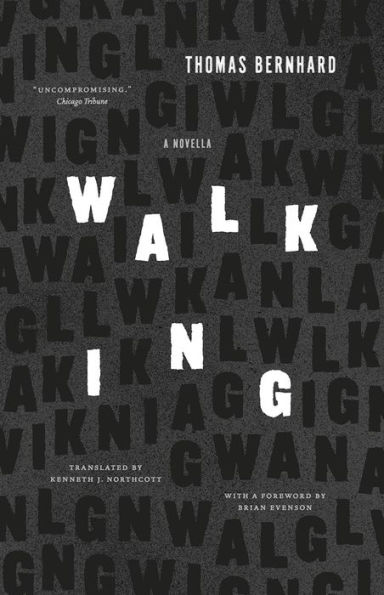
Walking: A Novella in Franklin, TN
Current price: $18.00
Barnes and Noble
Walking: A Novella in Franklin, TN
Current price: $18.00
Loading Inventory...
Size: Paperback
A bleak, hilarious novella from a master of black comedy that
Publishers Weekly
called "one of the 10 funniest books ever"
Thomas Bernhard is “one of the masters of contemporary European fiction” (George Steiner); “one of the century’s most gifted writers” (
Newsday
); “a virtuoso of rancor and rage” (
Bookforum
). And although he is favorably compared with Franz Kafka, Samuel Beckett, and Robert Musil, it is only in recent years that he has gained a devoted cult following in America.
A powerful, compact novella,
Walking
provides a perfect introduction to the absurd, dark, and uncommonly comic world of Bernhard, showing a preoccupation with themesillness and madness, isolation, tragic friendshipsthat would obsess Bernhard throughout his career.
records the conversations of the unnamed narrator and his friend Oehler while they walk, discussing anything that comes to mind but always circling back to their mutual friend Karrer, who has gone irrevocably mad. Perhaps the most overtly philosophical work in Bernhard’s highly philosophical oeuvre,
provides a penetrating meditation on the impossibility of truly thinking.
Publishers Weekly
called "one of the 10 funniest books ever"
Thomas Bernhard is “one of the masters of contemporary European fiction” (George Steiner); “one of the century’s most gifted writers” (
Newsday
); “a virtuoso of rancor and rage” (
Bookforum
). And although he is favorably compared with Franz Kafka, Samuel Beckett, and Robert Musil, it is only in recent years that he has gained a devoted cult following in America.
A powerful, compact novella,
Walking
provides a perfect introduction to the absurd, dark, and uncommonly comic world of Bernhard, showing a preoccupation with themesillness and madness, isolation, tragic friendshipsthat would obsess Bernhard throughout his career.
records the conversations of the unnamed narrator and his friend Oehler while they walk, discussing anything that comes to mind but always circling back to their mutual friend Karrer, who has gone irrevocably mad. Perhaps the most overtly philosophical work in Bernhard’s highly philosophical oeuvre,
provides a penetrating meditation on the impossibility of truly thinking.
A bleak, hilarious novella from a master of black comedy that
Publishers Weekly
called "one of the 10 funniest books ever"
Thomas Bernhard is “one of the masters of contemporary European fiction” (George Steiner); “one of the century’s most gifted writers” (
Newsday
); “a virtuoso of rancor and rage” (
Bookforum
). And although he is favorably compared with Franz Kafka, Samuel Beckett, and Robert Musil, it is only in recent years that he has gained a devoted cult following in America.
A powerful, compact novella,
Walking
provides a perfect introduction to the absurd, dark, and uncommonly comic world of Bernhard, showing a preoccupation with themesillness and madness, isolation, tragic friendshipsthat would obsess Bernhard throughout his career.
records the conversations of the unnamed narrator and his friend Oehler while they walk, discussing anything that comes to mind but always circling back to their mutual friend Karrer, who has gone irrevocably mad. Perhaps the most overtly philosophical work in Bernhard’s highly philosophical oeuvre,
provides a penetrating meditation on the impossibility of truly thinking.
Publishers Weekly
called "one of the 10 funniest books ever"
Thomas Bernhard is “one of the masters of contemporary European fiction” (George Steiner); “one of the century’s most gifted writers” (
Newsday
); “a virtuoso of rancor and rage” (
Bookforum
). And although he is favorably compared with Franz Kafka, Samuel Beckett, and Robert Musil, it is only in recent years that he has gained a devoted cult following in America.
A powerful, compact novella,
Walking
provides a perfect introduction to the absurd, dark, and uncommonly comic world of Bernhard, showing a preoccupation with themesillness and madness, isolation, tragic friendshipsthat would obsess Bernhard throughout his career.
records the conversations of the unnamed narrator and his friend Oehler while they walk, discussing anything that comes to mind but always circling back to their mutual friend Karrer, who has gone irrevocably mad. Perhaps the most overtly philosophical work in Bernhard’s highly philosophical oeuvre,
provides a penetrating meditation on the impossibility of truly thinking.
You May Also Like
















More About Barnes and Noble at CoolSprings Galleria
Barnes & Noble is the world’s largest retail bookseller and a leading retailer of content, digital media and educational products. Our Nook Digital business offers a lineup of NOOK® tablets and e-Readers and an expansive collection of digital reading content through the NOOK Store®. Barnes & Noble’s mission is to operate the best omni-channel specialty retail business in America, helping both our customers and booksellers reach their aspirations, while being a credit to the communities we serve.
1800 Galleria Blvd #1310, Franklin, TN 37067, United States
Find Barnes and Noble at CoolSprings Galleria in Franklin, TN
Visit Barnes and Noble at CoolSprings Galleria in Franklin, TN
