
Home
Whose Sustainability Counts?: BASIX's Long March from Microfinance to Livelihoods
Barnes and Noble
Loading Inventory...
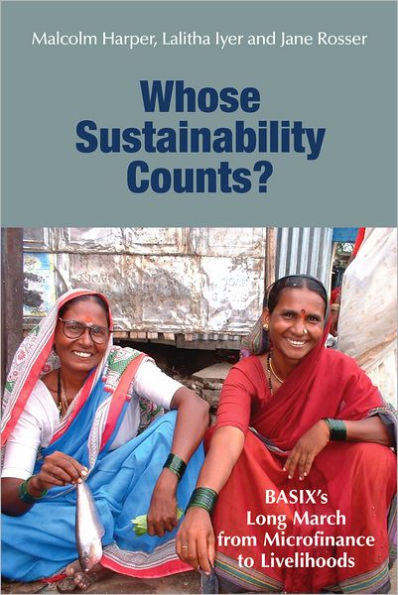
Whose Sustainability Counts?: BASIX's Long March from Microfinance to Livelihoods in Franklin, TN
Current price: $75.00
Barnes and Noble
Whose Sustainability Counts?: BASIX's Long March from Microfinance to Livelihoods in Franklin, TN
Current price: $75.00
Loading Inventory...
Size: Hardcover
By the end of 2010, the glowing reputation of microfinance was beginning to tarnish. The collapse of the microfinance industry in Andhra Pradesh, well-publicized client indebtedness, and the Bangladesh’s government’s sacking of Grameen Bank President Muhammad Yunus, the Nobel prize-winner and venerated father of microcredit, represented a critical turning point for the industry.
Where does microfinance go, then, in the midst of such crises? Are the basic principals of finance for the poor salvageable? From its inception in 1996, BASIX, one of the largest microfinance institutions in India realized that focusing solely on loans wasn’t going to improve the lives of its poor clients. It recognized that the complex problems of poverty require complex solutions and it melded financial services with livelihoods development and institutional sustainability to achieve its goals. The BASIX experience presents a vital model for the microfinance organization of the future, one that responds to client’s diverse needs by fostering diversity in the institutions that serve them.
Whose Sustainability Counts?
tells their illuminating story.
Where does microfinance go, then, in the midst of such crises? Are the basic principals of finance for the poor salvageable? From its inception in 1996, BASIX, one of the largest microfinance institutions in India realized that focusing solely on loans wasn’t going to improve the lives of its poor clients. It recognized that the complex problems of poverty require complex solutions and it melded financial services with livelihoods development and institutional sustainability to achieve its goals. The BASIX experience presents a vital model for the microfinance organization of the future, one that responds to client’s diverse needs by fostering diversity in the institutions that serve them.
Whose Sustainability Counts?
tells their illuminating story.
By the end of 2010, the glowing reputation of microfinance was beginning to tarnish. The collapse of the microfinance industry in Andhra Pradesh, well-publicized client indebtedness, and the Bangladesh’s government’s sacking of Grameen Bank President Muhammad Yunus, the Nobel prize-winner and venerated father of microcredit, represented a critical turning point for the industry.
Where does microfinance go, then, in the midst of such crises? Are the basic principals of finance for the poor salvageable? From its inception in 1996, BASIX, one of the largest microfinance institutions in India realized that focusing solely on loans wasn’t going to improve the lives of its poor clients. It recognized that the complex problems of poverty require complex solutions and it melded financial services with livelihoods development and institutional sustainability to achieve its goals. The BASIX experience presents a vital model for the microfinance organization of the future, one that responds to client’s diverse needs by fostering diversity in the institutions that serve them.
Whose Sustainability Counts?
tells their illuminating story.
Where does microfinance go, then, in the midst of such crises? Are the basic principals of finance for the poor salvageable? From its inception in 1996, BASIX, one of the largest microfinance institutions in India realized that focusing solely on loans wasn’t going to improve the lives of its poor clients. It recognized that the complex problems of poverty require complex solutions and it melded financial services with livelihoods development and institutional sustainability to achieve its goals. The BASIX experience presents a vital model for the microfinance organization of the future, one that responds to client’s diverse needs by fostering diversity in the institutions that serve them.
Whose Sustainability Counts?
tells their illuminating story.
You May Also Like
















More About Barnes and Noble at CoolSprings Galleria
Barnes & Noble is the world’s largest retail bookseller and a leading retailer of content, digital media and educational products. Our Nook Digital business offers a lineup of NOOK® tablets and e-Readers and an expansive collection of digital reading content through the NOOK Store®. Barnes & Noble’s mission is to operate the best omni-channel specialty retail business in America, helping both our customers and booksellers reach their aspirations, while being a credit to the communities we serve.
1800 Galleria Blvd #1310, Franklin, TN 37067, United States
Find Barnes and Noble at CoolSprings Galleria in Franklin, TN
Visit Barnes and Noble at CoolSprings Galleria in Franklin, TN
