
Home
Why Human Rights?: A Philosophical Guide
Barnes and Noble
Loading Inventory...
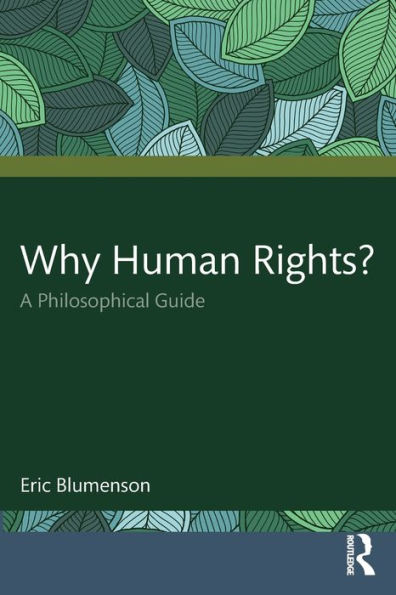
Why Human Rights?: A Philosophical Guide in Franklin, TN
Current price: $190.00
Barnes and Noble
Why Human Rights?: A Philosophical Guide in Franklin, TN
Current price: $190.00
Loading Inventory...
Size: Hardcover
Why Human Rights
addresses universal human rights as
moral
mandates – rights to justice that all persons have by virtue of their humanity alone. These are not the legal rights of statutes and treaties, but moral rights of the kind Gandhi, King, and Mandela invoked to
oppose
unjust laws. All such rights presuppose three claims: (1) that some duties of justice apply universally, (2) that all human beings have equal moral significance, and (3) that states must protect or serve certain individual interests regardless of the societal impact of doing so.
Can these three premises be justified? Is the human equality claim, for example, rationally supportable, or is it no less faith-based than hierarchical doctrines like caste? This book explores the case for these foundational claims along with other philosophical controversies pertaining to human rights. Because these issues lie at the heart of moral and political philosophy, readers will also obtain a broad appreciation of these disciplines and their leading theorists, including Mill, Kant, Rawls, Sandel, Nozick, Rorty, and many others. Written in concise, jargon-free language, this book presents a high-relief map of the philosophical issues surrounding human rights.
addresses universal human rights as
moral
mandates – rights to justice that all persons have by virtue of their humanity alone. These are not the legal rights of statutes and treaties, but moral rights of the kind Gandhi, King, and Mandela invoked to
oppose
unjust laws. All such rights presuppose three claims: (1) that some duties of justice apply universally, (2) that all human beings have equal moral significance, and (3) that states must protect or serve certain individual interests regardless of the societal impact of doing so.
Can these three premises be justified? Is the human equality claim, for example, rationally supportable, or is it no less faith-based than hierarchical doctrines like caste? This book explores the case for these foundational claims along with other philosophical controversies pertaining to human rights. Because these issues lie at the heart of moral and political philosophy, readers will also obtain a broad appreciation of these disciplines and their leading theorists, including Mill, Kant, Rawls, Sandel, Nozick, Rorty, and many others. Written in concise, jargon-free language, this book presents a high-relief map of the philosophical issues surrounding human rights.
Why Human Rights
addresses universal human rights as
moral
mandates – rights to justice that all persons have by virtue of their humanity alone. These are not the legal rights of statutes and treaties, but moral rights of the kind Gandhi, King, and Mandela invoked to
oppose
unjust laws. All such rights presuppose three claims: (1) that some duties of justice apply universally, (2) that all human beings have equal moral significance, and (3) that states must protect or serve certain individual interests regardless of the societal impact of doing so.
Can these three premises be justified? Is the human equality claim, for example, rationally supportable, or is it no less faith-based than hierarchical doctrines like caste? This book explores the case for these foundational claims along with other philosophical controversies pertaining to human rights. Because these issues lie at the heart of moral and political philosophy, readers will also obtain a broad appreciation of these disciplines and their leading theorists, including Mill, Kant, Rawls, Sandel, Nozick, Rorty, and many others. Written in concise, jargon-free language, this book presents a high-relief map of the philosophical issues surrounding human rights.
addresses universal human rights as
moral
mandates – rights to justice that all persons have by virtue of their humanity alone. These are not the legal rights of statutes and treaties, but moral rights of the kind Gandhi, King, and Mandela invoked to
oppose
unjust laws. All such rights presuppose three claims: (1) that some duties of justice apply universally, (2) that all human beings have equal moral significance, and (3) that states must protect or serve certain individual interests regardless of the societal impact of doing so.
Can these three premises be justified? Is the human equality claim, for example, rationally supportable, or is it no less faith-based than hierarchical doctrines like caste? This book explores the case for these foundational claims along with other philosophical controversies pertaining to human rights. Because these issues lie at the heart of moral and political philosophy, readers will also obtain a broad appreciation of these disciplines and their leading theorists, including Mill, Kant, Rawls, Sandel, Nozick, Rorty, and many others. Written in concise, jargon-free language, this book presents a high-relief map of the philosophical issues surrounding human rights.
You May Also Like












More About Barnes and Noble at CoolSprings Galleria
Barnes & Noble is the world’s largest retail bookseller and a leading retailer of content, digital media and educational products. Our Nook Digital business offers a lineup of NOOK® tablets and e-Readers and an expansive collection of digital reading content through the NOOK Store®. Barnes & Noble’s mission is to operate the best omni-channel specialty retail business in America, helping both our customers and booksellers reach their aspirations, while being a credit to the communities we serve.
1800 Galleria Blvd #1310, Franklin, TN 37067, United States
Find Barnes and Noble at CoolSprings Galleria in Franklin, TN
Visit Barnes and Noble at CoolSprings Galleria in Franklin, TN
