
Home
Women's Working Lives East Asia
Barnes and Noble
Loading Inventory...
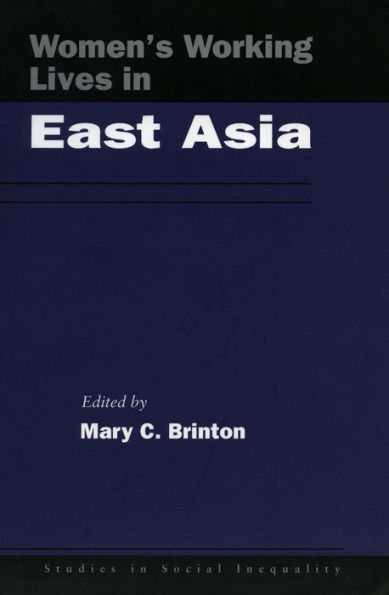
Women's Working Lives East Asia in Franklin, TN
Current price: $150.00
Barnes and Noble
Women's Working Lives East Asia in Franklin, TN
Current price: $150.00
Loading Inventory...
Size: Hardcover
One of the most dramatic economic changes of the past century has been the increase in married women’s work outside the home. This volume examines the nature of married women’s participation in the economies of three East Asian countries—Japan, Taiwan, and South Korea. In addition to asking what is similar or different about women’s economic participation in this region of the world compared to Western societies, the book also asks how women’s work patterns vary across the three countries.
The essays focus on key theoretical questions for the study of women’s labor and, more broadly, economic gender inequality. How do we assess the “value” of work available to married women in different countries and cultural contexts? What forces promote or hinder women’s work outside the home throughout marriage and childrearing? Does wage employment necessarily benefit women more than the “informal” sector (e.g., family-run businesses)? Is full-time work always more desirable than part-time work? Do women who return to the labor force after absences due to family responsibilities incur a heavy wage penalty for interrupted careers? The essays balance comparative assessments in a broad East Asian context with detailed investigations of one or more questions in the context of a specific country.
The studies reveal that, although all three countries share common cultural and demographic conditions, patterns of women’s economic participation are distinctly different in Taiwan from those in Japan and South Korea. Whereas women’s participation in Taiwan’s economy shows striking similarities to many Western countries, married women in Japan and Korea participate less in the economy, and their earnings differ more from men’s than in Taiwan or the West. Why is Taiwan more similar to the West while Japan and South Korea are more similar to each other? The book draws on a broad range of materials to explain this puzzle.
One of the explanations advanced is that overall labor demand, a greater supply of highly educated men, and more rigid work conditions (especially in large firms) in Japan and South Korea are major obstacles to the equal economic participation of married women in those countries. Also, the greater flexibility in work demands and work hours prevalent in Taiwan is complemented by relatively weaker patriarchal values in the family.
The essays focus on key theoretical questions for the study of women’s labor and, more broadly, economic gender inequality. How do we assess the “value” of work available to married women in different countries and cultural contexts? What forces promote or hinder women’s work outside the home throughout marriage and childrearing? Does wage employment necessarily benefit women more than the “informal” sector (e.g., family-run businesses)? Is full-time work always more desirable than part-time work? Do women who return to the labor force after absences due to family responsibilities incur a heavy wage penalty for interrupted careers? The essays balance comparative assessments in a broad East Asian context with detailed investigations of one or more questions in the context of a specific country.
The studies reveal that, although all three countries share common cultural and demographic conditions, patterns of women’s economic participation are distinctly different in Taiwan from those in Japan and South Korea. Whereas women’s participation in Taiwan’s economy shows striking similarities to many Western countries, married women in Japan and Korea participate less in the economy, and their earnings differ more from men’s than in Taiwan or the West. Why is Taiwan more similar to the West while Japan and South Korea are more similar to each other? The book draws on a broad range of materials to explain this puzzle.
One of the explanations advanced is that overall labor demand, a greater supply of highly educated men, and more rigid work conditions (especially in large firms) in Japan and South Korea are major obstacles to the equal economic participation of married women in those countries. Also, the greater flexibility in work demands and work hours prevalent in Taiwan is complemented by relatively weaker patriarchal values in the family.
One of the most dramatic economic changes of the past century has been the increase in married women’s work outside the home. This volume examines the nature of married women’s participation in the economies of three East Asian countries—Japan, Taiwan, and South Korea. In addition to asking what is similar or different about women’s economic participation in this region of the world compared to Western societies, the book also asks how women’s work patterns vary across the three countries.
The essays focus on key theoretical questions for the study of women’s labor and, more broadly, economic gender inequality. How do we assess the “value” of work available to married women in different countries and cultural contexts? What forces promote or hinder women’s work outside the home throughout marriage and childrearing? Does wage employment necessarily benefit women more than the “informal” sector (e.g., family-run businesses)? Is full-time work always more desirable than part-time work? Do women who return to the labor force after absences due to family responsibilities incur a heavy wage penalty for interrupted careers? The essays balance comparative assessments in a broad East Asian context with detailed investigations of one or more questions in the context of a specific country.
The studies reveal that, although all three countries share common cultural and demographic conditions, patterns of women’s economic participation are distinctly different in Taiwan from those in Japan and South Korea. Whereas women’s participation in Taiwan’s economy shows striking similarities to many Western countries, married women in Japan and Korea participate less in the economy, and their earnings differ more from men’s than in Taiwan or the West. Why is Taiwan more similar to the West while Japan and South Korea are more similar to each other? The book draws on a broad range of materials to explain this puzzle.
One of the explanations advanced is that overall labor demand, a greater supply of highly educated men, and more rigid work conditions (especially in large firms) in Japan and South Korea are major obstacles to the equal economic participation of married women in those countries. Also, the greater flexibility in work demands and work hours prevalent in Taiwan is complemented by relatively weaker patriarchal values in the family.
The essays focus on key theoretical questions for the study of women’s labor and, more broadly, economic gender inequality. How do we assess the “value” of work available to married women in different countries and cultural contexts? What forces promote or hinder women’s work outside the home throughout marriage and childrearing? Does wage employment necessarily benefit women more than the “informal” sector (e.g., family-run businesses)? Is full-time work always more desirable than part-time work? Do women who return to the labor force after absences due to family responsibilities incur a heavy wage penalty for interrupted careers? The essays balance comparative assessments in a broad East Asian context with detailed investigations of one or more questions in the context of a specific country.
The studies reveal that, although all three countries share common cultural and demographic conditions, patterns of women’s economic participation are distinctly different in Taiwan from those in Japan and South Korea. Whereas women’s participation in Taiwan’s economy shows striking similarities to many Western countries, married women in Japan and Korea participate less in the economy, and their earnings differ more from men’s than in Taiwan or the West. Why is Taiwan more similar to the West while Japan and South Korea are more similar to each other? The book draws on a broad range of materials to explain this puzzle.
One of the explanations advanced is that overall labor demand, a greater supply of highly educated men, and more rigid work conditions (especially in large firms) in Japan and South Korea are major obstacles to the equal economic participation of married women in those countries. Also, the greater flexibility in work demands and work hours prevalent in Taiwan is complemented by relatively weaker patriarchal values in the family.
You May Also Like










More About Barnes and Noble at CoolSprings Galleria
Barnes & Noble is the world’s largest retail bookseller and a leading retailer of content, digital media and educational products. Our Nook Digital business offers a lineup of NOOK® tablets and e-Readers and an expansive collection of digital reading content through the NOOK Store®. Barnes & Noble’s mission is to operate the best omni-channel specialty retail business in America, helping both our customers and booksellers reach their aspirations, while being a credit to the communities we serve.
1800 Galleria Blvd #1310, Franklin, TN 37067, United States
Find Barnes and Noble at CoolSprings Galleria in Franklin, TN
Visit Barnes and Noble at CoolSprings Galleria in Franklin, TN
